How to Choose the Best Preschool in North Bangalore for Your Child in 2026
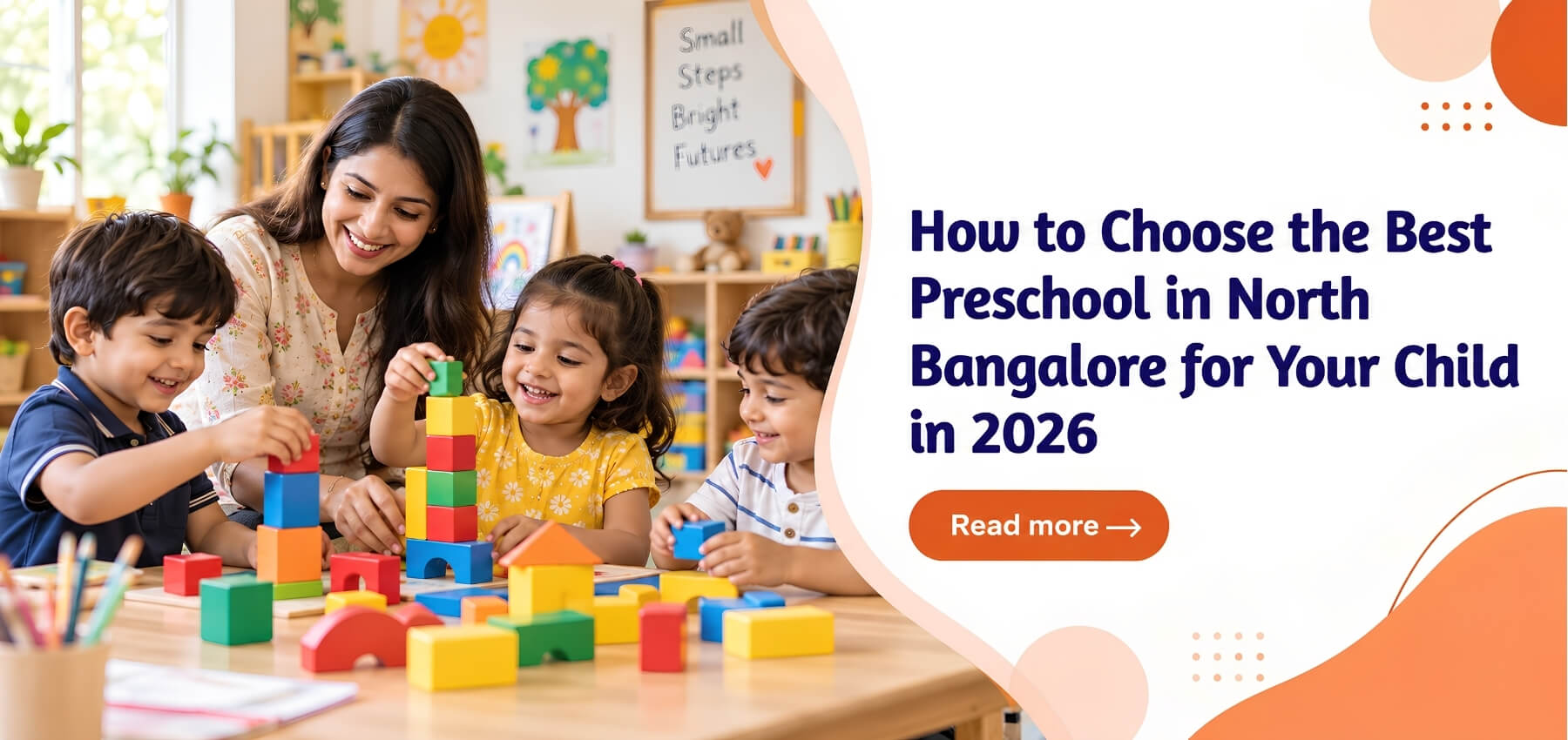
Table of content
- Introduction
- Why PreSchool choice matters in 2026
- Start with your child's individual needs
- Look for play-based learning
- Observe teachers carefully
- Check safety and hygiene
- Understand school readiness
- Look at language and communication development
- Check class environment and individual attention
- Consider outdoor play and physical development
- Think about location and travel time
- Visit the campus before admission
- Conclusion
- Frequently asked questions
Introduction
Choosing a best PreSchool is one of the first important education decisions parents make for their child. It can also feel confusing because North Bangalore now has many options across Yelahanka, Rajankunte, RT Nagar, Vidyaranyapura, Hesaraghatta Road and nearby residential areas.
A quick Google search for the Best PreSchools in North Bangalore may give you many school names, reviews and advertisements. However, the PreSchool that looks best online may not always be the right one for your child.
Young children need more than attractive classrooms or an impressive list of activities. They need teachers who understand them, a safe environment where they feel comfortable, enough time to play and explore, and learning experiences that match their age.
Why Choosing the Right PreSchool Matters in 2026
PreSchool is often a child's first regular experience of learning outside the home. It is also where many children first learn to follow routines, communicate with a larger group, share materials and spend time away from their parents.
This means PreSchool education should not be treated simply as preparation for worksheets and examinations. A good early learning environment should support language, movement, thinking, creativity, social development, independence and emotional confidence.
India's National Curriculum Framework for the Foundational Stage places play at the centre of early childhood learning. It recommends a balance of free play, guided play and structured play so that young children can learn through enjoyable, age-appropriate experiences.
Start With Your Child, Not With the School's Marketing
Every child is different. Some children happily join a new group within minutes, while others need more time before they feel comfortable. Some love talking and storytelling, while others prefer building, drawing or quiet exploration. A PreSchool should recognise these differences.
Before visiting schools, think about what your child currently needs. Does your child need more opportunities to communicate with other children? Are you looking for strong school-readiness support? Does your family require daycare? Would a smaller, calmer campus suit your child better?
This simple step makes PreSchool selection easier because you stop asking, “Which school is popular?” and start asking, “Which environment is suitable for my child?” The best PreSchool experience is one where children feel safe enough to explore and supported enough to gradually become independent.
Look for a Genuine Play-Based Learning Approach
The words “play-based learning” appear on many PreSchool websites, but parents should understand what they actually mean.
Play-based learning does not mean allowing children to play without purpose throughout the day. It means teachers create meaningful activities where children learn concepts through movement, conversation, stories, games, materials and exploration.
For example, children may learn counting while arranging objects, develop vocabulary during storytelling, understand shapes while building with blocks and improve coordination through sand, water or art activities.
NCERT describes guided play as an approach where children take an active role while teachers support them with questions and carefully planned learning goals.
This is why a PreSchool visit is important. Ask the teacher to explain how a normal concept such as numbers, letters, colours or vocabulary is introduced. The answer will quickly tell you whether learning is mostly worksheet-based or truly interactive.
Observe How Teachers Communicate With Children
One of the easiest ways to understand a PreSchool is to watch the teachers.
A beautiful classroom cannot replace a warm and patient educator. Young children need adults who listen to them, encourage their questions and guide behaviour without making them afraid of mistakes.
During your school visit, notice whether teachers get down to a child's level while speaking. See whether children appear comfortable approaching them. Listen to the tone used when a child needs help. A good early childhood teacher understands that development does not happen at exactly the same speed for every child.
The goal should be steady development, not unnecessary comparison between young children.
Safety and Hygiene Should Be Non-Negotiable
When parents search for the Best PreSchools in North Bangalore, academic programmes often receive most of the attention. Safety deserves equal importance.
Walk through the campus rather than judging only the reception area. Look at classrooms, corridors, stairs, washrooms, play areas and pickup points. These spaces should be clean, organised and suitable for young children.
Ask how visitors enter the school and how children are handed over at pickup time. Parents should also understand what happens when a child becomes unwell or gets a minor injury.
If transportation or daycare is available, ask how supervision is managed during those hours too. Safety should never be something parents assume. It is always worth asking direct questions during the campus tour.
Check How the PreSchool Prepares Children for Primary School
School readiness is often misunderstood as making PreSchool children read and write as early as possible. Real readiness is wider than that.
Children entering primary school benefit from being able to communicate basic needs, follow simple instructions, listen to a story, interact with classmates, complete small tasks and manage everyday routines with growing independence.cAsk the PreSchool how it prepares children for Grade 1. A good answer should include social, emotional, language, physical and academic readiness rather than focusing only on writing worksheets.
Look at Language and Communication Development
Communication becomes especially important during the PreSchool years. Children need regular opportunities to talk, listen, sing, ask questions, hear stories and express their ideas. These activities help build vocabulary and confidence naturally.
Phonics classes can also support early reading when it is taught at the right pace. However, phonics should not turn PreSchool into a stressful reading programme.
During a campus visit, ask how teachers support children who are shy or speak less in group settings. Good communication development should encourage participation without forcing every child to behave in the same way.
Look at the Classroom Environment and Individual Attention
An early learning classroom should invite children to explore.
Books, puzzles, toys, building materials, art resources and other age-appropriate materials should be arranged in a way that makes learning interesting and accessible. You can also look at what is displayed on the walls. Children's drawings, paintings and classroom work can be a positive sign that participation is valued.
Ask how teachers handle different learning needs within the same class. The answer matters more than simply asking for a student-teacher ratio.
A child who needs help with an activity should be able to receive support, while another child who finishes early should still have something meaningful to explore. This balance helps children learn without unnecessary pressure.
Outdoor Play and Movement Matter Too
Young children are not meant to spend most of their day sitting at a desk. Running, climbing, balancing, dancing and outdoor games support physical development and coordination. Movement also gives children healthy opportunities to use their energy and interact with other children.
When visiting a PreSchool, ask how often children get outdoor or active play opportunities. Also check whether the play space is age-appropriate and properly supervised. A balanced PreSchool routine should include quiet learning, creative activities, conversation and plenty of movement.
Check Parent-School Communication
Parents and teachers both see different parts of a child's development. Good communication between them makes it easier to understand how the child is settling and progressing.
Ask how teachers share updates. Find out whether the school organises parent meetings and how families are informed about classroom learning or concerns.
Communication should go beyond sending photos of activities. Parents should be able to understand how their child is interacting, communicating, becoming independent and responding to the PreSchool routine. Parents should also feel comfortable sharing information with teachers when something at home may affect the child's mood or behaviour.
Visit the PreSchool Before Taking PreSchool Admission
A campus visit is one of the most important steps you can take before choosing a PreSchool. Websites can explain programmes and facilities, but they cannot completely show you how a school feels during a normal day.
Spend time observing the environment. Notice whether children look comfortable and engaged. Ask teachers how they manage separation anxiety, conflicts between children and different learning speeds.
Find out what happens during a normal day from arrival to departure. Ask how time is divided between free play, guided activities, outdoor movement, storytelling, phonics, early numeracy, meals and rest.
Conclusion
When evaluating the Best PreSchools in North Bangalore, focus less on extensive advertising, facility size, or exhaustive activity lists. Instead, prioritize whether the environment makes your child feel secure, appreciated, and eager to learn.
An effective early education program balances nurturing educators, purposeful play, foundational skills in literacy and numeracy, physical engagement, social growth, and smooth school readiness; all while honoring developmental milestones rather than accelerating early childhood.
Selecting the right school creates a supportive, encouraging, and inspiring transition into early education for families and children alike.
Admissions Open 2026-27 at NewAge PreSchools
For more helpful parenting tips, early learning insights, and PreSchool guidance, explore the NewAge PreSchools Blog. Discover how we create a nurturing and engaging environment where young children can learn, explore, and grow with confidence. If you are looking for PreSchool admission in Yelahanka, visit NewAge PreSchools to learn more about our programs, curriculum, and admission process for 2026–27.
Frequently Asked Questions
How important is the distance from home?
Distance can be very important for young children. A shorter and more predictable commute may help reduce tiredness and make the PreSchool routine easier for both the child and parents.
What should I ask during a PreSchool visit?
Ask about the daily routine, teacher support, learning approach, safety procedures, outdoor play, parent communication, school readiness and how the preschool supports children who need more time to settle.
Is play-based learning better for PreSchool children?
Play is an important part of early learning. NCERT's National Curriculum Framework for the Foundational Stage recommends balanced opportunities for free, guided and structured play because young children learn effectively through active and enjoyable experiences.
How do I choose the best PreSchool in North Bangalore?
Start by looking at safety, teacher-child interaction, play-based learning, school readiness, communication development, cleanliness, outdoor activities and distance from home. Visit shortlisted schools and choose the environment where your child is likely to feel safe and comfortable.

NewAge PreSchool

Leave a Reply
Your email address will not be published. Required fields are marked *
Comments
No comments available