Looking for the Best PreSchool in Yelahanka? Here’s What Parents Should Check Before Admission
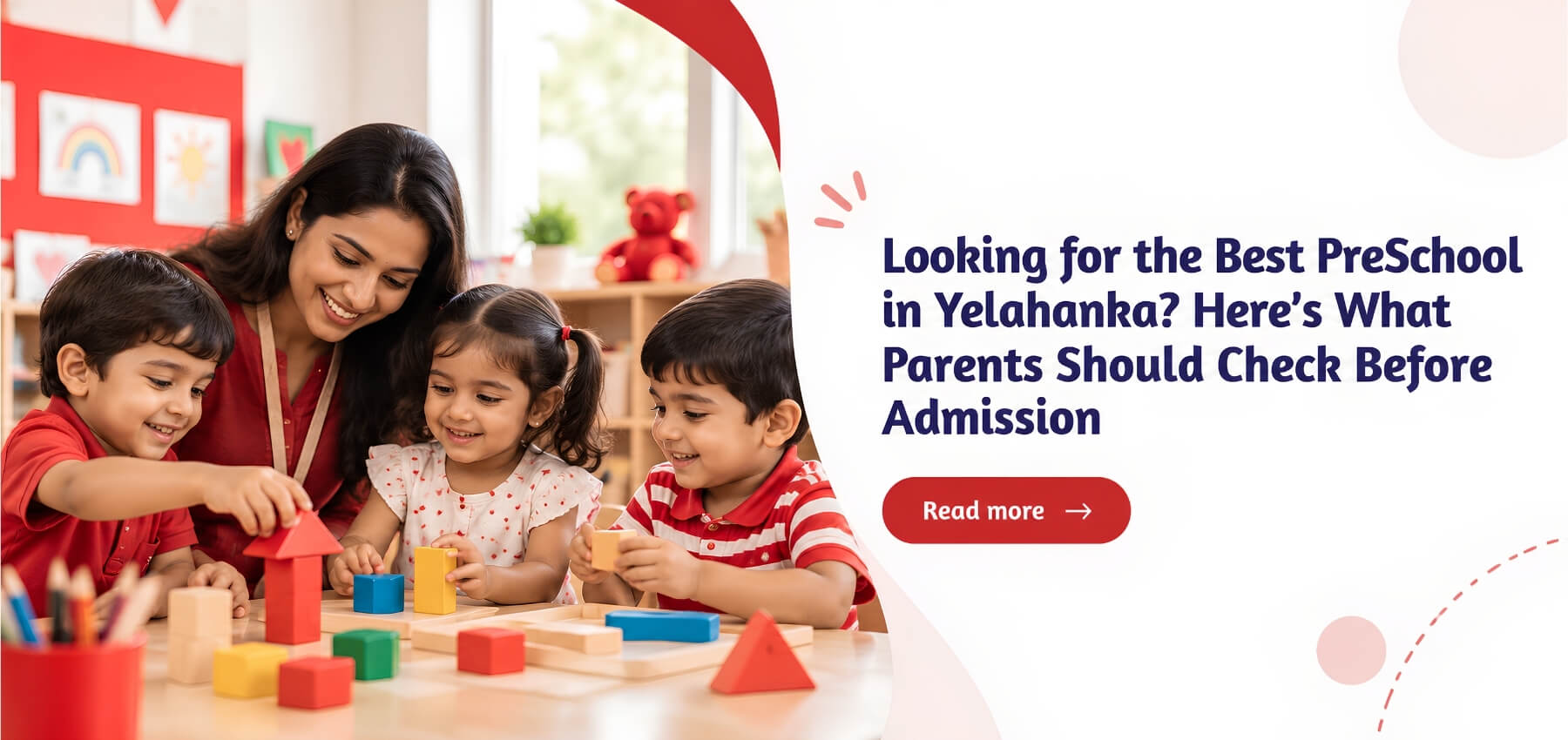
Table of content
- Introduction
- Why choosing the right PreSchool matters
- Check the safety and hygiene standards
- Observe how teachers interact with children
- Understand the teaching and learning approach
- Look for enough play and activity-based learning
- Check how the school supports language and communication
- Understand school readiness without academic pressure
- Look at classroom size and individual attention
- Check outdoor play and physical development
- Ask how parents receive updates
- Visit the PreSchool before admission
- Questions to ask during a school tour
- Conclusion
- Frequently Asked Questions
Introduction
Choosing your child's first school can feel exciting and confusing at the same time. You may have already searched online for the Best PreSchools in Yelahanka, spoken to other parents and visited a few school websites. Still, one question remains: how do you know which PreSchool is actually right for your child?
A PreSchool may have colourful classrooms and an impressive website, but parents need to look deeper. Your child will spend an important part of the early years in this environment. The school should feel safe, caring and comfortable while giving children enough opportunities to play, communicate, explore and slowly become independent.
Early childhood education matters because these years support a child's physical, language, cognitive, social and emotional development. UNICEF explains that early childhood experiences and responsive interactions with caregivers play an important role in building the foundation for future learning and development.
So, instead of selecting a PreSchool only because it appears in a list of the Best PreSchools in North Bangalore, it is better to visit the school campus, meet the teachers and understand what your child's everyday experience will actually look like.
Why Choosing the Right PreSchool Matters
PreSchool is often a child's first experience of spending regular time away from home in a structured learning environment. The way children experience this transition can influence how comfortable and confident they feel about learning.
A good PreSchool does not expect children to behave like older school students. Instead, it understands that children learn through movement, conversation, play, stories, exploration and interaction.
India's National Curriculum Framework for the Foundational Stage also places play at the centre of early learning. It explains that children should receive balanced opportunities for free play, guided play and structured play, with teachers supporting learning according to children's developmental needs.
When comparing the Best PreSchools in Yelahanka, parents should ask themselves a simple question: “Will my child feel safe, interested and comfortable learning here?” That question can often tell you more than advertisements or rankings.
Check Safety and Hygiene Before Anything Else
Safety should be one of the first things parents observe during a PreSchool visit.
Look around the classrooms, corridors, stairs, washrooms and outdoor areas. The environment should be clean, organised and suitable for small children. Furniture should be child-friendly, play spaces should be supervised and children should be able to move comfortably without unnecessary hazards.
Ask the school how entry and exit are managed, who is allowed to pick up children and how visitors are monitored. Parents should also understand how the school manages emergencies, first aid, illness and general supervision. Washrooms deserve particular attention because PreSchool children may still require assistance. They should be clean, easy for children to use and regularly maintained.
Parents looking for a PreSchool near Yelahanka can visit NewAge PreSchool to learn more about school nurturing learning environment, age-appropriate programs, engaging curriculum, and admission process.
Observe How Teachers Speak to Children
During your visit, notice how teachers communicate with children. Do they speak calmly? Do they listen when a child asks something? Do children appear comfortable approaching them?
Young learners need patience and encouragement. A PreSchool teacher should guide rather than constantly correct or rush the child. Children at this age develop at different speeds. One child may communicate confidently while another takes more time to open up. One may enjoy group activities, while another may initially prefer quieter play.
The National Curriculum Framework notes that each child develops at an individual pace and that learning outcomes in the foundational years should be understood as a developmental journey rather than rigid age-based targets. When looking for the Best PreSchool in Yelahanka, choose a place where teachers appear to understand this difference.
Understand the PreSchool's Learning Approach
Parents often ask, “What curriculum does the school follow?” That is an important question, but another question is equally useful: “How is the curriculum actually taught?”
A PreSchool programme should not depend mainly on worksheets, copying or memorising information. Children understand ideas better when they can see, touch, talk about and experiment with them.
For example, children can learn numbers while counting toys, colours while painting, language through stories and conversation, and problem-solving through puzzles and construction activities.
The Government of India's National Curriculum Framework for the Foundational Stage recommends flexible, play-based, activity-based and inquiry-based learning during the early years. It includes storytelling, songs, puzzles, outdoor play, art, movement, numbers, language and problem-solving as part of foundational learning.
Look for Meaningful Play, Not Just Classroom Lessons
It is easy to think that children are “just playing”, but play is one of the most important ways young children learn.
During pretend play, children use imagination and communication. Building blocks can introduce balance, shapes and problem-solving. Sand and water activities strengthen coordination and exploration. Group games help children learn waiting, cooperation and following simple rules.
UNICEF notes that play supports young children's learning, development, care and connection. It also highlights activities such as reading, storytelling, singing, drawing and playing as important opportunities for cognitive, social and emotional development.
When comparing Best PreSchools in North Bangalore, ask how much time children spend playing, exploring and interacting instead of simply sitting in classroom.
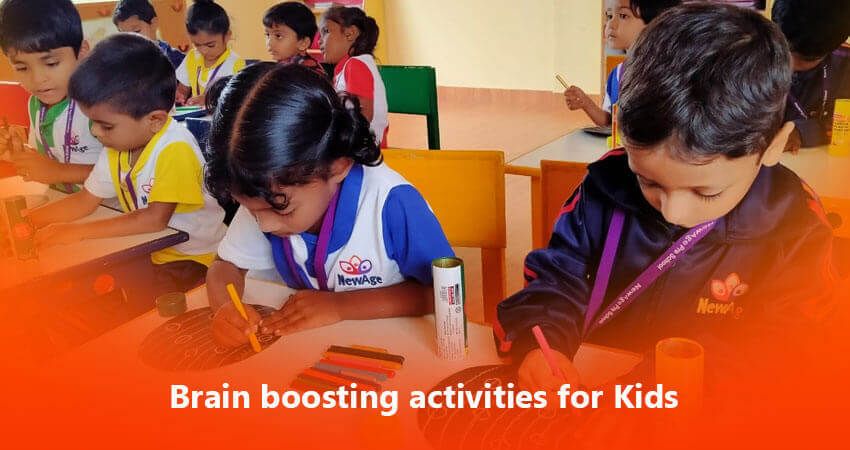
At NewAge PreSchool, learning philosophy includes a combination of play-based experiences with structured literacy and numeracy activities designed to support emotional, social and cognitive development.
Check How the PreSchool Builds Language and Communication
PreSchool is an important stage for developing communication. Look for classrooms where children are encouraged to speak, listen, sing, tell stories and participate in conversations. Language development should feel natural and enjoyable.
Teachers can strengthen communication by asking open questions rather than expecting only one-word answers. Story sessions can encourage children to imagine what happens next. Role-play can give shy children opportunities to express themselves without pressure.
Reading also matters. A PreSchool with books, storytelling routines and age-appropriate early literacy activities can help children develop interest in language before formal reading becomes demanding.
NewAge PreSchool emphasises phonics, reading development and school readiness as part of its PreSchool programme.
Look for School Readiness Without Unnecessary Academic Pressure
Parents naturally want their children to be prepared for primary school. However, school readiness is much bigger than knowing the alphabet or writing numbers early.
A school-ready child is gradually learning to listen, communicate needs, follow simple routines, interact with other children, complete small tasks and become more independent.
UNICEF India notes that quality pre-primary education supports school readiness and is associated with stronger learning during the early primary years. Academic preparation still has a place. Early literacy and numeracy can be introduced through stories, conversations, games, rhymes, patterns, counting and everyday experiences.
The important point is balance. Children should not lose the joy of learning because of unnecessary academic pressure.
Ask About Individual Attention and Classroom Environment
Every PreSchool classroom will have a group of children, but parents should understand how teachers manage individual needs within that group.
Ask how many children are normally present and how many adults supervise them. Instead of focusing only on a particular ratio, observe whether teachers can comfortably communicate with each child and respond when help is needed.
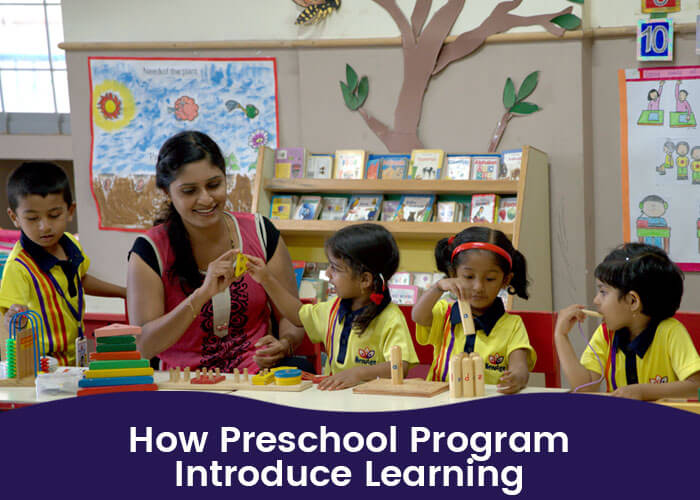
The classroom itself should invite curiosity. Books, toys, puzzles, art materials and age-appropriate learning resources should be accessible and thoughtfully arranged.
Notice whether children's own work is displayed. A classroom filled only with perfect adult-made decorations may look attractive, but seeing children's drawings and creations often tells parents that participation and self-expression are valued.
Check Outdoor Play and Physical Development
Young children need movement. Running, jumping, climbing, balancing and outdoor games help children develop physical coordination and confidence. Outdoor play also gives them opportunities to explore space, interact with friends and release energy in a healthy way.
During your PreSchool visit, ask to see the play area. Check whether outdoor activities are supervised and appropriate for the age group. A PreSchool programme that gives children enough time for movement is often more balanced than one where young learners are expected to remain seated for long periods.
Understand How Social and Emotional Skills Are Supported
PreSchool is where many children begin regularly sharing space, toys and adult attention with a larger group of children. Small situations such as waiting for a turn, joining a game, asking for help or handling disappointment become important learning moments.
Teachers should help children express emotions in suitable ways rather than expecting perfect behaviour immediately. Conflict between young children can also become an opportunity to teach communication, empathy and problem-solving.
Ask How the School Communicates With Parents
PreSchool works best when teachers and parents understand what is happening in the child's life. Ask how the school shares updates. Some PreSchools may use parent meetings, communication apps, messages, diaries or regular discussions.
Good communication should cover more than activities and photos. Parents should be able to understand how their child is settling, interacting, communicating and progressing.
At the same time, parents should feel comfortable sharing useful information with teachers. If a child is finding separation difficult or experiencing a change at home, communication can help the teacher respond more sensitively.
Always Visit Before Finalising PreSchool Admission
Online research is useful, but a campus visit gives parents information that a website cannot fully provide. Observe how the space feels during a normal school day. Listen to how teachers communicate. See whether children appear relaxed and engaged.
Ask to understand the daily routine rather than only viewing facilities. Find out how much time is given to play, stories, outdoor activity, language development, creative work and free exploration.
What Should Parents Ask During a PreSchool Tour?
Rather than arriving with a long checklist, have a natural conversation with the admissions team and teachers. Ask them to explain a normal day in the classroom. Find out how teachers support children who are shy or initially struggle with separation. Ask how learning is balanced with play, what happens when children disagree and how teachers communicate progress to families.
It is also useful to understand hygiene routines, pickup and drop, security, emergency procedures and how teachers respond when a child needs individual support. The answers should help you imagine your own child spending several hours there each day.
Conclusion
Searching for the Best PreSchool in Yelahanka is not simply about finding the school with the biggest campus, the longest list of facilities or the most advertisements. The right PreSchool should help your child feel safe enough to explore, supported enough to communicate and curious enough to enjoy learning.
When comparing the Best PreSchools in Yelahanka, visit the school and focus on the child's everyday experience. Look at how teachers interact, how much children play, how the environment supports independence and whether learning feels age-appropriate.
Admissions Open 2026-27 at NewAge PreSchool Yelahanka
If you are exploring PreSchools in Yelahanka, you can visit NewAge PreSchool Yelahanka to experience the learning environment personally. The school focuses on play-based learning, phonics and reading development, school readiness, trained educators, child-friendly infrastructure and a focus on holistic early development.
Frequently Asked Questions
Which factors matter when comparing the Best PreSchools in Yelahanka?
Instead of comparing schools only through rankings, consider your child's individual needs. Safety, teacher quality, play-based learning, communication development, school readiness, emotional support, location and parent-school communication are all important factors.
How important are teachers when choosing a PreSchool?
Teachers are extremely important because they shape the child's daily experience. Look for educators who communicate warmly, understand that children develop at different speeds and create opportunities for children to ask questions and participate.
Should PreSchool children be given a lot of homework?
PreSchool learning should focus strongly on age-appropriate experiences, interaction, stories, language, movement, play and exploration. Parents should be cautious about programmes that create unnecessary academic pressure at a very young age.
Is play-based learning important in PreSchool?
Yes. India's National Curriculum Framework for the Foundational Stage places play and activity among the primary ways young children learn and develop. A balanced PreSchool programme should offer free play, guided play and thoughtfully structured activities.
What should I check before PreSchool admission?
Parents should understand the school's daily routine, learning approach, teacher support, safety arrangements, hygiene, outdoor play, early literacy and numeracy activities, parent communication and school-readiness programme. Location and daycare facilities may also matter depending on your family's needs.
How do I choose the best PreSchool in Yelahanka?
Start by checking the PreSchool's safety, cleanliness, teaching approach, teacher-child interaction, opportunities for play, communication with parents and overall atmosphere. Visit the campus before admission and choose the environment where your child is most likely to feel safe, comfortable and interested in learning.

NewAge PreSchool
Leave a Reply
Your email address will not be published. Required fields are marked *
Comments
No comments available