PreSchool Admission in Yelahanka: A Complete Guide for Parents for 2026–27
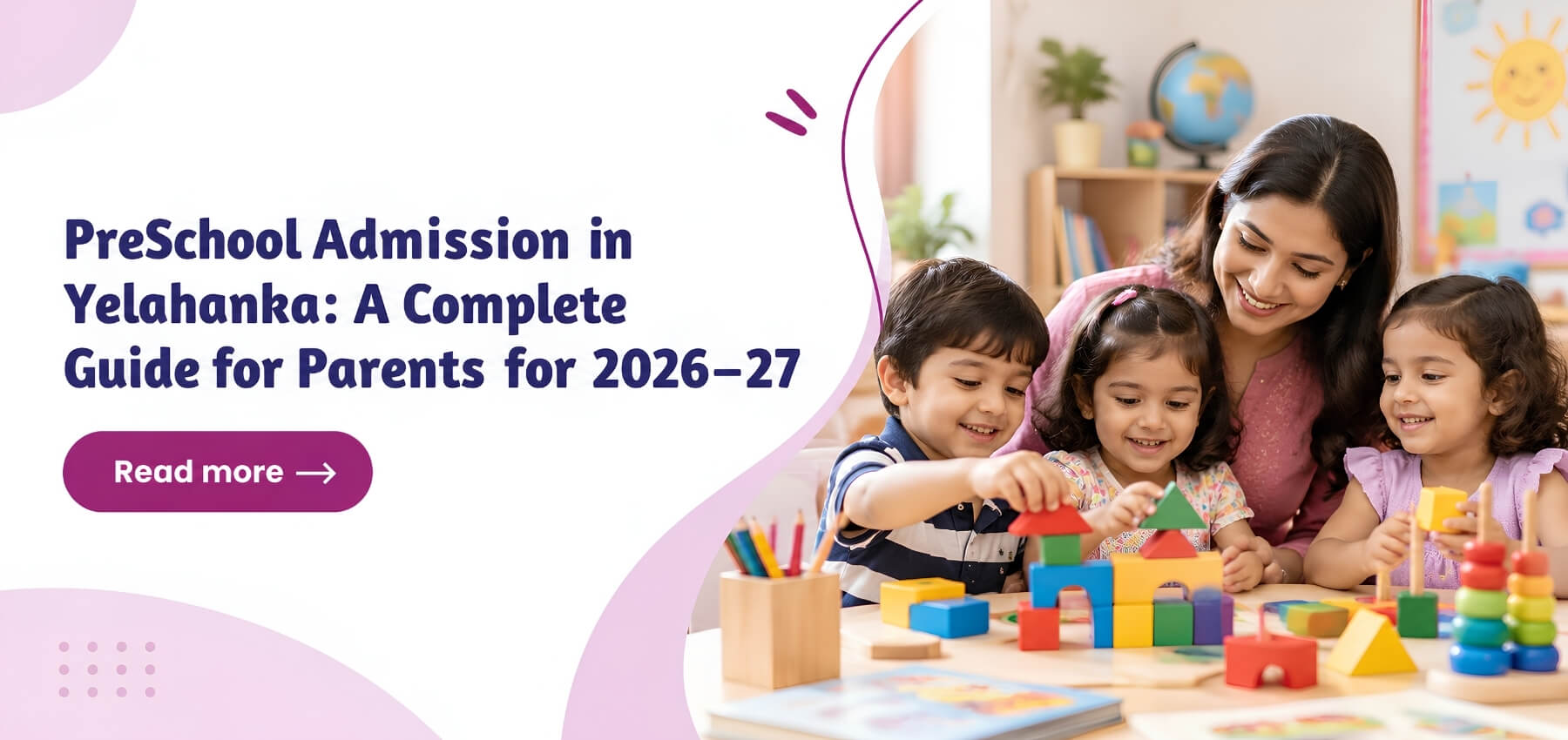
Table of content
- Introduction
- When parents should start the admission process
- Understanding the right PreSchool age group
- Signs your child may be ready for PreSchool
- What school readiness actually means
- Preparing important admission information
- What Parents Should Ask During a PreSchool Admission Enquiry in Yelahanka
- Why a campus visit matters
- Prepare your child before the first day of PreSchool
- Handling separation during the first few weeks
- Conclusion
- Frequently asked questions
Introduction
Choosing the right PreSchool is an important milestone for both parents and children. As the 2026–27 academic year approaches, many parents begin comparing PreSchools, understanding admission timelines, checking age criteria, exploring different learning programs, and visiting campuses before making a decision.
If you are planning for PreSchool admission in Yelahanka, starting the process early can make everything much easier. This guide covers the key things parents should know about PreSchool admissions for 2026–27, from when to start your search and what to look for during a school visit to preparing your child for their first PreSchool experience.
When Should Parents Start PreSchool Admission for 2026–27?
Parents do not need to wait until the last moment to start researching PreSchools. Beginning early gives you enough time to understand programmes, visit campuses, speak with educators and compare practical factors such as school timings, travel distance and daycare needs.
For the 2026–27 academic year, start by shortlisting schools that are reasonably close to your home or workplace. After that, check whether the programme matches your child's age and developmental stage.
Do not select a PreSchool only because another parent has chosen it. Two children of the same age can have very different personalities and needs. One child may easily adapt to a group environment, while another may require a slower transition. Ensuring the school can adequately accommodate your child's needs is a key goal of the admissions process.
Understanding the Right PreSchool Programme for Your Child
Age is important when choosing a PreSchool programme, but it should not be the only consideration. A two-year-old entering PreSchool may need more emotional comfort, communication support and gentle interaction. At three, children often become more interested in playing with other children and expressing their needs. By four and five, early literacy, numeracy, problem-solving and school-readiness activities may gradually become more structured.
The goal should not be to push children into advanced work before they are ready. PreSchool should help them move naturally from one developmental stage to another. Parents comparing the Best PreSchool in Yelahanka should ask not only, “Which class will my child join?” but also, “What developmental goals does this programme support?”
How Do You Know If Your Child Is Ready for PreSchool?
Parents sometimes worry that their child must already know alphabets, numbers, colours or writing before entering PreSchool. That is not the right way to look at readiness. A child does not need to arrive at PreSchool academically prepared.
Readiness can include becoming comfortable with short periods away from parents, communicating basic needs, following simple instructions, showing curiosity about other children and gradually managing small daily routines. Some children will already be confident in these areas. Others will develop these abilities after joining PreSchool.
India's NIPUN Bharat guidelines describe school readiness as something that involves not only the child, but also the school and family. It includes preparing children for a smooth move from PreSchool to primary education while supporting language, early literacy, numeracy, physical development and wider developmental skills.
School Readiness Is More Than Reading and Writing
One of the biggest mistakes parents can make is treating PreSchool readiness as an early academic competition. A child who can write many words at four years old is not automatically more school-ready than a child who is still learning to write but can listen, communicate, solve small problems and work independently.
Real school readiness develops across several areas at the same time. Children gradually learn to follow classroom routines, sit for age-appropriate activities, listen to stories, participate in conversations, work with simple numbers, recognise patterns, strengthen fine motor skills and manage social situations.
This is an important point when comparing the Best PreSchools in North Bangalore. Ask how the school prepares children for the next stage without turning PreSchool into a highly pressured academic environment.
What Information Should Parents Keep Ready for Admission?
Each PreSchool can have its own admission process, so parents should always confirm the exact requirements with the school. Before beginning the process, keep your child's basic information ready, including date of birth, parent contact details, residential information and any information about the child's previous PreSchool experience if applicable.
The school may also ask you to submit specific documents during the formal admission process. Requirements can vary, so avoid relying on an old checklist from another school or previous academic year. It is better to ask the admissions team for the current 2026–27 requirements directly. This prevents delays and ensures that you submit only the documents actually requested.
Parents should also share relevant information about their child's routine. For example, if your child takes time to settle in new environments, has never attended PreSchool before or needs additional support in certain daily activities, telling the school can help educators plan the transition more thoughtfully.
What Parents Should Ask During a PreSchool Admission Enquiry in Yelahanka
PreSchool admission enquiry should be more than a discussion about fees and available seats. Use this conversation to understand what your child's normal day would look like.
Ask about arrival time, classroom routines, guided activities, play, language development, meals, outdoor time and departure. If you require daycare, ask how the child's routine changes after PreSchool hours. You can also ask how educators handle children who cry during the first few days. Find out how they communicate with parents when a child is taking longer to adjust.
This is also a good time to understand the progression between different PreSchool levels. Parents should know what the child is expected to develop during the year and how educators observe that development.
Why a PreSchool Campus Visit Matters Before Admission
When you walk into the PreSchool campus, notice how the environment feels. You do not need to judge it like an inspector. Simply imagine your own child arriving there every morning.
Observe whether young children can move comfortably around the space. Look at classrooms, activity areas and outdoor spaces where available. Notice whether the environment seems designed for young children rather than older students.
Most importantly, pay attention to human interaction. How do teachers speak to children? Are children comfortable approaching adults? Does the classroom sound active and happy without feeling uncontrolled?
Ask questions about your child's age group during the visit. A meaningful conversation with educators can tell you much more than a long list of facilities.
Prepare Your Child Before the First Day of PreSchool
Parents can begin preparing their child at home a few weeks prior to starting PreSchool.
Frame school in a positive light while maintaining realistic expectations. Rather than constantly assuring them, “You will love school,” describe what their daily experience will genuinely look like. Explain that they will encounter teachers, classmates, toys, story sessions, and activities, and reassure them that you will pick them up when the day ends.
Establishing simple daily routines can smooth the transition process. Slowly guide your child toward handling small tasks on their own: like putting away toys, carrying their own bag, or expressing when they need assistance. Additionally, setting consistent sleep and wake schedules helps ease the adjustment to morning PreSchool hours.
Try not to introduce multiple major changes right before the school year starts; instead, allow your child sufficient time to adapt to the idea of starting PreSchool.
Handling Separation During the First Few Weeks
For some children, separation is a completely new experience. They may need time to understand that their parents leave and reliably return later. Parents can help by keeping the goodbye warm but clear. Long emotional goodbyes may sometimes make separation more difficult.
Try to follow a consistent drop-off routine and allow the teachers to build a relationship with the child. It is also useful to ask the PreSchool how they manage the settling period. Good communication between parents and educators helps both sides understand whether the child is gradually becoming comfortable.
The goal is not to stop every tear immediately. The goal is to help children slowly develop trust, confidence and independence.
Conclusion
Securing a PreSchool admission ought to be a thoughtful journey rather than a rushed decision. The primary goal is identifying a nurturing setting where your child builds confidence, acquires foundational skills, and transitions seamlessly into spending time away from family.
While evaluating the Best PreSchools in Yelahanka, move beyond marketing materials and acceptance letters. Carefully assess the curriculum structure, engage directly with teaching staff, evaluate travel convenience, and envision your child's daily routine.
An effective early learning centre fosters overall childhood development. Although introductory literacy and numeracy are valuable, equal priority must be given to physical activity, personal independence, inquiry, effective communication, social connections, and emotional stability. Initiating your search well in advance grants you the time needed to weigh options thoroughly, preventing stressful, last-minute choices.
Admissions Open for 2026–27 at NewAge PreSchools
For more helpful parenting tips, early learning insights, and PreSchool guidance, explore the NewAge PreSchools Blog. Discover how we create a nurturing and engaging environment where young children can learn, explore, and grow with confidence. If you are looking for PreSchool admission in Yelahanka, visit NewAge PreSchools to learn more about our programs, curriculum, and admission process for 2026–27.
Frequently Asked Questions
What should I ask during the admission meeting?
Ask about the daily routine, programme goals, settling period, communication with parents, school readiness, classroom activities, daycare if required and how the school supports children who need extra time to adjust.
Is my child required to know alphabets and numbers before PreSchool?
Young children do not need to arrive at PreSchool already academically trained. PreSchool should help develop communication, early literacy, numeracy, motor skills, social confidence and independence at an age-appropriate pace.
How can I choose among the Best PreSchools in Yelahanka?
Compare programme suitability, travel distance, teacher interaction, school readiness, communication with parents, safety and how comfortable your child seems during a visit. Do not make the decision based only on an online ranking.
What is the right age to start PreSchool?
There is no single answer that suits every programme. Schools can structure PreSchool levels differently. NewAge currently begins Peer Group 0 at 2+ years, followed by programmes for children aged 3+, 4+ and 5+. Parents should always confirm eligibility based on the school's current admission criteria and their child's date of birth.
When should I apply for PreSchool admission in Yelahanka for 2026–27?
Parents can start researching once schools announce their 2026–27 admissions. Starting early gives families enough time to visit campuses, understand programmes and discuss age eligibility. NewAge PreSchools currently lists admissions as open for the 2026–27 academic year.

Admin
Shivani Sahu is an experienced blogger and dedicated educator with a decade of teaching experience in Pre-primary education. She loves to help and inspire young children to learn more and grow as individuals. Shivani writes articles to share her knowledge and tips, hoping to motivate children to discover new things, learn a lot, and reach their best potential.





Leave a Reply
Your email address will not be published. Required fields are marked *
Comments
No comments available