How PreSchoolers Develop Independence: Simple Self-Help Skills Every Child Can Learn
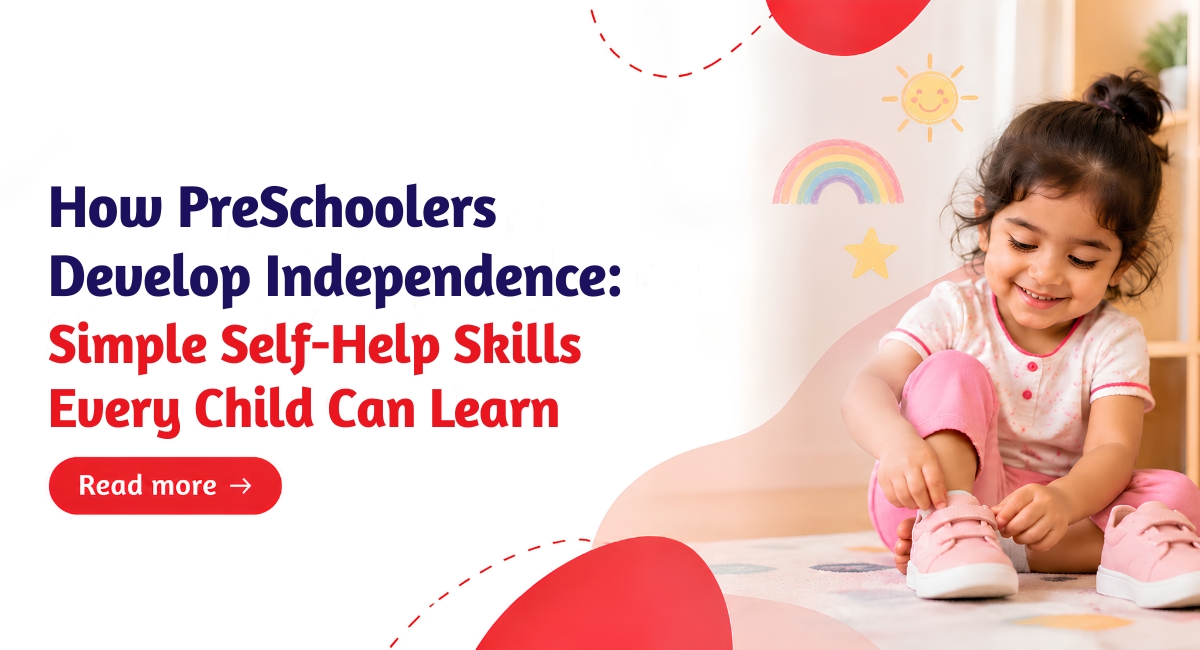
Table of content
1. Introduction
2. Life Skills for Kids: What Do They Mean in PreSchool?
3. Self Help Skills for PreSchoolers: Where Should Children Begin?
4. Independence in Children Through Choices and Daily Routines
5. Self Care Skills for Kids: Dressing, Eating and Personal Hygiene
6. Practical Life Skills for Kids Through Simple Household Tasks
7. Self Help Skills for PreSchoolers in the Classroom
8. Independence in Children Through Free Play and Problem-Solving
9. Daily Living Skills for Kids and School Readiness
10. How Parents Can Build Independence Without Putting Pressure on Children
11. Conclusion
12. Frequently Asked Questions
Introduction
When young children try to wear their shoes, carry their water bottle or put toys away, they are learning to do things on their own. They may take more time or make small mistakes, and that is okay. With a little help and encouragement, children slowly become more confident. These small everyday tasks are important life skills for kids.
Life Skills for Kids: What Do They Mean in PreSchool?
Life skills for kids are simple things children learn to do every day. These include washing hands, eating by themselves, putting toys away, asking for help and making small choices.
A three- or four-year-old does not need to do everything alone. Parents and teachers can show them what to do, let them try and help when needed. Every small step matters.
Self Help Skills for PreSchoolers: Where Should Children Begin?
Self help skills for PreSchoolers start with easy daily tasks. Children can carry their bags, put books and toys in place, use a spoon and try wearing simple clothes.
Some days, a child may wear a shirt without help but struggle with buttons. They may also spill food while learning to eat alone. That is normal. Give them time to practise and praise their effort instead of expecting everything to be perfect.
Independence in Children Through Choices and Daily Routines
Independence in children grows when they can make small choices. For example, parents can ask, “Would you like the blue shirt or the yellow one?” or “Shall we put away the books or blocks first?”
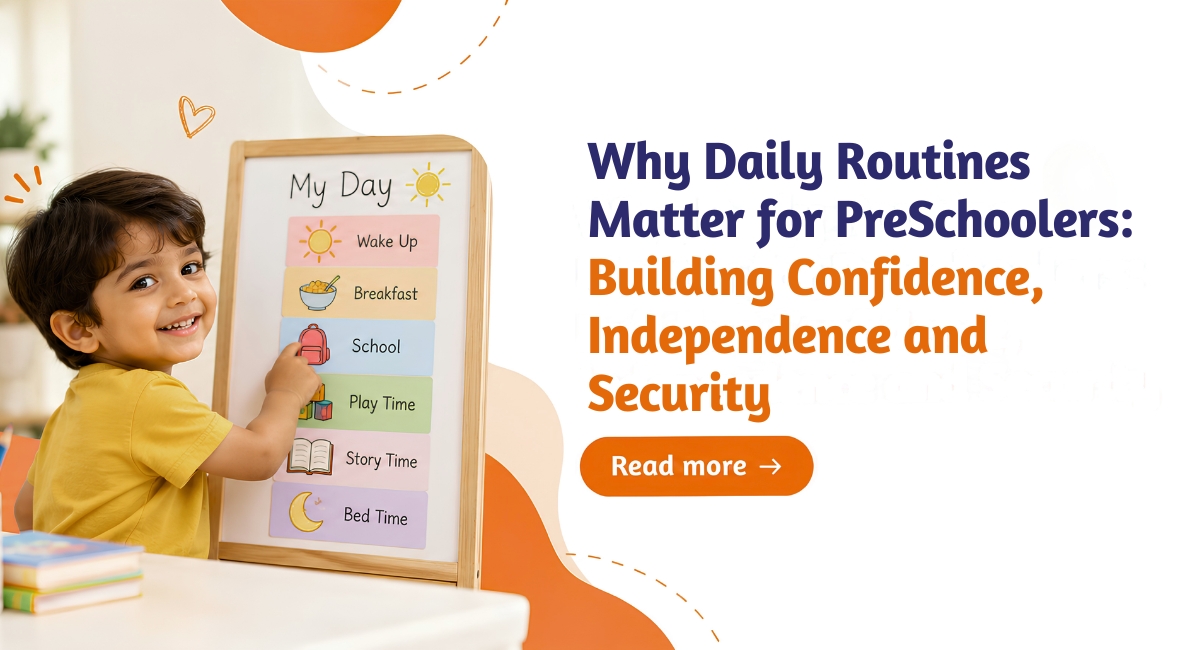
Daily routines also help. When children wash their hands before meals, keep shoes in one place and clean up after play, these habits become easier over time. Simple choices and routines teach responsibility.
Self Care Skills for Kids: Dressing, Eating and Personal Hygiene
Self care skills for kids include eating, drinking from a cup, washing hands, wearing shoes and trying to dress. Parents can show each step and let children do what they can.
Children learn toilet habits at different ages, so they may need extra time and support. Teach handwashing with soap after using the toilet, before eating and after play. Avoid rushing children when they are trying something new.
Practical Life Skills for Kids Through Simple Household Tasks
Children often love helping their parents. Small jobs like watering plants, arranging books, matching socks, putting clothes in a basket or setting out safe items for a meal can teach practical life skills for kids.
Give your child a job that is easy and safe for their age. It does not have to be done perfectly. When children see that their help matters, they feel proud and confident.
Self Help Skills for PreSchoolers in the Classroom
PreSchool is a good place for children to practise doing small things on their own. They learn to carry their bags, keep toys in the right place, wait for their turn and tell teachers when they need help.
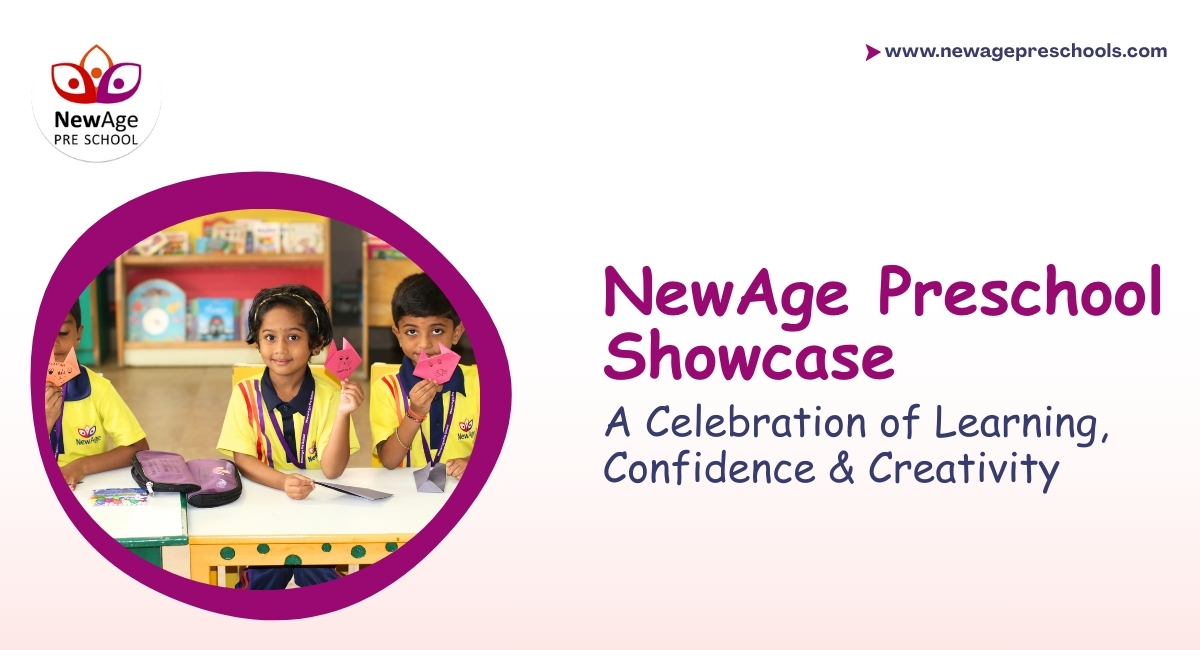
At NewAge PreSchools, we focus on building confidence, curiosity, communication and independence from the early stages of learning. Starting from Peer Group 0 (PG 0), children are encouraged to explore, interact with others and take part in age-appropriate activities. Our caring teachers guide every child through fun learning experiences and daily routines that support their overall growth and development.
Independence in Children Through Free Play and Problem-Solving
Free play gives children a chance to choose what they want to do. They may build a tower, play with blocks, choose colours or find a way to solve a small problem.
If a tower falls, let your child try building it again before stepping in. These moments help children think, make choices and learn from mistakes. Adults should stay nearby and keep play safe while giving children space to try.
Daily Living Skills for Kids and School Readiness
Daily living skills for kids help children feel more comfortable when they start school. Simple habits like keeping things away, following short instructions, sharing and asking for help can make the school day easier.
At NewAge PreSchools, children are supported through play, activities and teacher guidance. Getting ready for school is not only about letters and numbers. Confidence, communication and small responsibilities are important too.
Explore: Learning at NewAge PreSchool
How Parents Can Build Independence Without Putting Pressure on Children
Start with one easy task. Show your child how to do it, let them try and help only when they need you. If they spill water while pouring, calmly show them how to wipe it up.
Do not compare your child with other children. Some learn to dress first, while others become good at eating or cleaning up. Celebrate small efforts and give children time to learn at their own speed.
Conclusion
Children become independent one small step at a time. Putting toys away, trying to dress, making simple choices and helping at home all build useful life skills. With patience and support, children feel more confident doing everyday tasks.
At NewAge PreSchools, play-based learning, guided activities and simple daily routines help children grow in confidence and independence. Admissions for 2026–27 are open. Book a school tour to meet the teachers and explore the learning environment.
Frequently Asked Questions
What if my child always asks me to do everything?
Choose one small task, do it together first and slowly let your child try more of it alone. Be patient.
Does independent play help children become more confident?
Yes. Choosing activities and solving small problems during play can help children feel more confident.
How can I teach self care skills without arguments?
Keep tasks easy, give your child enough time, show them how and praise their effort. Help calmly when needed.
What self help skills should a 3-year-old learn?
A three-year-old can start practising washing hands, eating with a spoon, carrying a small bag, putting toys away and trying simple clothes.
At what age should a child start becoming independent?
Children start learning small tasks from an early age. Give them safe, age-appropriate jobs and help when needed.
What are the most important life skills for kids in PreSchool?
Eating, washing hands, putting toys away, making small choices, following simple routines and asking for help are useful early skills.
Admin
Shivani Sahu is an experienced blogger and dedicated educator with a decade of teaching experience in Pre-primary education. She loves to help and inspire young children to learn more and grow as individuals. Shivani writes articles to share her knowledge and tips, hoping to motivate children to discover new things, learn a lot, and reach their best potential.
Leave a Reply
Your email address will not be published. Required fields are marked *
Comments
No comments available