Sensory Play in PreSchool: How Touch, Sand, Water and Texture Support Development
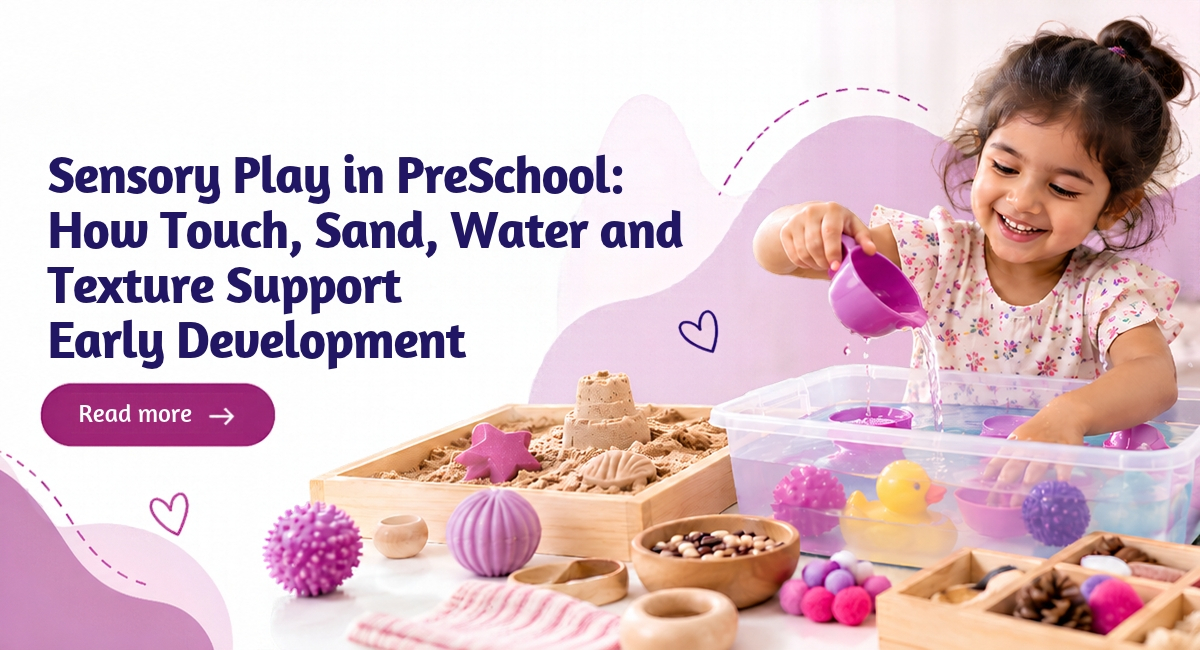
Table of content
1. Introduction
2. What Are Sensory Activities for Kids?
3. How Sensory Play for PreSchoolers Helps Children Grow
4. Sensory Activities for PreSchoolers Using Touch and Texture
5. Sand Play for PreSchoolers: Learning Through Digging and Building
6. Water Play for PreSchoolers: Learning Through Fun Activities
7. How Sensory Play for Kids Improves Hand and Thinking Skills
8. Sensory Development in Children Through Talking and Playing Together
9. How to Make Sensory Activities Safe for PreSchoolers
10. Sensory Play at PreSchool and at Home
11. Conclusion
12. Frequently Asked Questions
Introduction
Young children love touching, playing and exploring things around them. They enjoy playing with sand, pouring water, squeezing clay and feeling different textures. These activities may look like simple fun, but they help children learn many important skills.
Sensory activities for kids help children improve their hand movements, thinking skills, communication and creativity. When children play with different materials, they learn new things through their own experiences. Sensory play makes learning fun, simple and enjoyable without putting pressure on children.
What Are Sensory Activities for Kids?
Sensory activities for kids are simple activities that help children learn by using their senses, such as touch, sight, hearing and movement. Playing with sand, water, clay, soft toys, leaves and different materials are common examples of sensory play.
These activities help children understand how things feel and work. For example, children may notice that dry sand falls easily, while wet sand can be used to make shapes. They may also learn that some objects float in water while others sink. Through these small experiences, children become curious and start exploring the world around them.
How Sensory Play for PreSchoolers Helps Children Grow
Sensory play for PreSchoolers supports children's physical, mental and social development. When children scoop sand, pour water or play with clay, they improve their hand movements and coordination. When they talk about what they are doing, they also learn new words and improve their communication skills.
Sensory play also helps children think and solve simple problems. For example, if a sandcastle falls, a child may try building it again using wet sand. These small activities teach children to observe, try new ideas and learn from their experiences. Most importantly, children enjoy learning because they are playing and having fun.
Sensory Activities for PreSchoolers Using Touch and Texture
Sensory activities for PreSchoolers can be done using simple materials like soft cloth, smooth stones, leaves, paper, sponges and clay. Children enjoy touching these materials and understanding how each one feels.
Parents and teachers can introduce simple words like soft, hard, rough, smooth, wet and dry while children play. For example, they can ask, 'Is this cloth soft?' or 'How does this stone feel?' Playing with clay or dough is also helpful because children can squeeze, roll, press and make different shapes. These activities improve hand strength, creativity and learning through touch.
Sand Play for PreSchoolers: Learning Through Digging and Building
Sand play for PreSchoolers is a fun activity that helps children learn while playing. Children enjoy digging, filling buckets, making shapes and building sandcastles. These activities improve their hand movements, coordination and creativity.
Sand play also helps children understand simple ideas like big and small, more and less, and different shapes. When children play together, they learn to share toys, wait for their turn and work as a team. They can plan what to build, help each other and solve small problems while having fun.
Water Play for PreSchoolers: Learning Through Fun Activities
Water play for PreSchoolers is another enjoyable way for children to learn. Simple activities like pouring water into cups, filling bottles and moving water between containers help children understand how water moves.
For example, children may notice that a small cup fills quickly, while a bigger container needs more water. They can also explore which objects float and which ones sink. These activities improve hand-eye coordination, curiosity and thinking skills. Water play should always happen under close adult supervision to keep children safe.
How Sensory Play for Kids Improves Hand and Thinking Skills
Sensory play for kids helps children improve their hand movements and thinking skills through simple activities. When children squeeze clay, use a scoop, pick up objects or pour water, they practise using their fingers and hands. These movements can also help them with activities like drawing, colouring and holding pencils as they grow.
Sensory play also teaches children to try different ways to solve problems. For example, a child may try building a sandcastle using dry sand, but it keeps falling. After adding water, the child notices that the sand stays together better. Such small experiences help children understand that trying again is an important part of learning.
Sensory Development in Children Through Talking and Playing Together
Sensory development in children also supports communication and social skills. When children explore different materials, they often want to talk about what they see, touch and feel. Parents and teachers can encourage them by asking simple questions like 'What are you making?' or 'How does it feel?'
Playing with other children also teaches important social skills. For example, when two children share a water tray or build something with sand, they learn to share materials, take turns and work together. These everyday activities help children improve communication, patience, friendship and teamwork.
How to Make Sensory Activities Safe for PreSchoolers
Sensory activities should always be safe and suitable for the child's age. Parents and teachers should use clean, non-toxic materials and stay close to children during play. Small objects that can cause choking should be avoided, and water activities should always be supervised.
Every child is different. Some children enjoy touching wet sand or clay, while others may not feel comfortable at first. Parents and teachers should never force children to touch something they dislike. Instead, they can allow children to watch, use a spoon or scoop or try another material. The main goal is to make sensory play safe, comfortable and enjoyable for every child.
Sensory Play at PreSchool and at Home
Sensory play does not need expensive toys or special equipment. Parents can create simple activities at home using water, dough, soft cloth, safe kitchen containers and other everyday materials. These activities give children opportunities to explore, play and learn.
At PreSchool, teachers can connect sensory activities with storytelling, art, simple maths, language and group play. At NewAge PreSchools, children enjoy activities like water play, sand play, free play and creative learning. These hands-on activities help children develop confidence, communication, creativity and important early learning skills.
Conclusion
Sensory play is a simple and enjoyable way to support children's early development. Activities like playing with sand, pouring water, squeezing clay and exploring different textures help children improve their hand movements, thinking skills, communication and creativity. Children learn best when they are given time to explore, play and discover things on their own.
At NewAge PreSchools, we encourage children to learn through fun and meaningful activities. Our sand play, water play and creative learning experiences help children explore new things, build confidence and enjoy their early learning journey. Admissions for 2026–27 are open! Book a School Tour at NewAge PreSchools to explore our learning environment, meet our teachers and see how fun activities support your child's growth and development.
Frequently Asked Questions
Can sensory play help with language development?
Yes. When children talk about what they touch, see and make, they learn new words and improve their communication skills.
What do children learn through water play?
Water play helps children understand pouring, filling, floating and sinking. It also improves hand-eye coordination and encourages them to explore new ideas.
Is sand play useful for PreSchoolers?
Yes. Sand play helps children improve hand coordination, creativity and thinking skills. It also teaches them to share, work together and understand simple shapes and sizes.
Why are sensory activities important for young children?
Sensory activities help children improve hand movements, thinking skills, communication, creativity and problem-solving. They also make learning fun and enjoyable.
What is sensory play for PreSchoolers?
Sensory play means allowing children to explore and learn through their senses. Activities like playing with sand, water, clay and different textures help children understand the world around them.

Admin
Shivani Sahu is an experienced blogger and dedicated educator with a decade of teaching experience in Pre-primary education. She loves to help and inspire young children to learn more and grow as individuals. Shivani writes articles to share her knowledge and tips, hoping to motivate children to discover new things, learn a lot, and reach their best potential.




Leave a Reply
Your email address will not be published. Required fields are marked *
Comments
No comments available