Raising Multilingual PreSchoolers in Bangalore: Supporting English Without Losing the Home Language
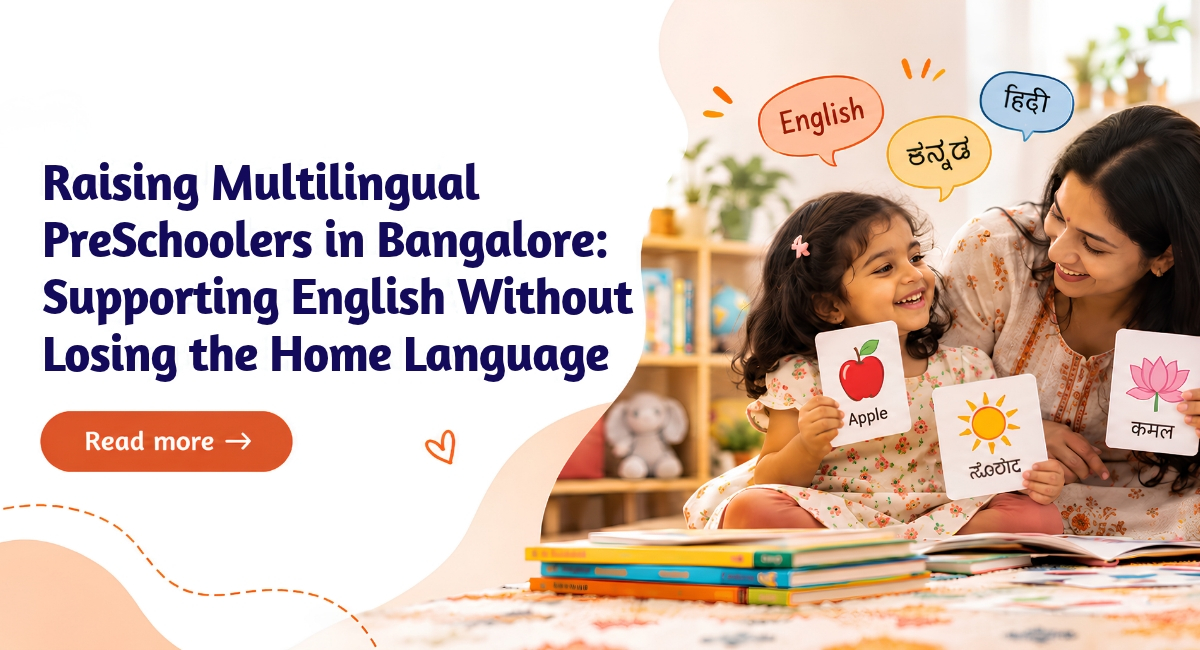
Table of content
1. Introduction
2. Growing Up with Different Languages in Bangalore
3. Why the Home Language Matters
4. How Preschoolers Learn English Naturally
5. Benefits of Learning More Than One Language
6. Simple Ways Parents Can Support Both Languages
7. How PreSchools Support Language Development
8. Common Concerns About Multilingual Children
9. Conclusion: Every Language Has a Place in a Child's Life
10.Frequently Asked Questions
Introduction
At home, your child may ask for water in Kannada, tell a story in Hindi and sing an English rhyme learned at PreSchool. For many families in Bangalore, this is part of everyday life. Still, parents sometimes wonder whether learning English will make their child forget the language spoken at home.
Raising multilingual PreSchoolers in Bangalore is not about choosing one language over another. It is about helping children feel comfortable expressing themselves in different situations. English is useful for school, while the home language keeps children connected to family conversations, stories and traditions. With simple daily interactions, patient guidance and a welcoming PreSchool environment, children can gradually learn English without losing the language that feels familiar and close to their hearts.
1. Growing Up with Different Languages in Bangalore
Bangalore brings together families from different states and cultural backgrounds. Children may hear Kannada, Tamil, Telugu, Hindi, Malayalam and English during an ordinary day. A child might speak Telugu with grandparents, Hindi with neighbours and English with PreSchool friends. This is a natural experience for many families.
Bilingual language development in preschoolers happens through regular listening, speaking and interaction. Children gradually understand which words people use in different situations. Some children may understand two languages but speak mainly one. Others may combine words from different languages while talking. Parents do not need to expect the same level of fluency in every language. What matters is giving children enough opportunities to communicate without making them feel uncomfortable about the language they choose.
2. Why the Home Language Matters
The language spoken at home often carries a child's earliest memories. It is the language of bedtime stories, conversations with grandparents, favourite songs and everyday family moments. The importance of mother tongue in early childhood goes beyond learning words. A familiar language helps children express feelings, understand family members and stay connected to their cultural background. Imagine a grandmother telling a story in Kannada. The child is not only listening to words but also enjoying a meaningful moment with someone they love.
According to UNESCO, learning in a language children understand supports meaningful and inclusive education. Parents should not feel pressured to replace their home language with English. Speaking naturally with children in a familiar language can support communication while allowing them to learn another language at PreSchool.
3. How PreSchoolers Learn English Naturally
English language learning for preSchoolers does not need to begin with long lessons or memorising difficult words. Young children often learn through everyday experiences. When a teacher says, "Please keep your shoes here," while pointing towards a shelf, children begin connecting the words with the action. Stories, rhymes, picture books and classroom conversations also introduce useful English words.
At home, parents can name colours while arranging toys or count fruits during snack time. Children may initially respond in their home language even when they understand English. This is normal. Instead of correcting every sentence, adults can respond naturally and model simple English expressions. With regular exposure, children can gradually become comfortable listening and speaking. The focus should be on communication rather than perfect pronunciation or grammar.
4. Benefits of Learning More Than One Language
The benefits of multilingualism in early childhood include opportunities to communicate with different people and understand different cultures. A child who knows the family language can enjoy conversations with grandparents and relatives. English can help the same child communicate with teachers and classmates from different language backgrounds.
Children also discover that familiar objects can have different names. For example, they may know one word for milk at home and another at PreSchool. These experiences help children understand that people communicate in different ways. The American Speech-Language-Hearing Association explains that children can learn multiple languages and that multilingualism does not cause language disorders. Learning different languages should feel like an opportunity to connect with people, not a competition to speak better than others.
5. Simple Ways Parents Can Support Both Languages
Parents wondering how to teach English to preSchoolers can begin with everyday activities. There is no need to create a strict timetable for each language.
Continue Speaking Your Home Language
If your family speaks Tamil, Kannada or Telugu at home, continue using it during meals, playtime and conversations. Children benefit from hearing complete sentences and familiar expressions.
Read and Tell Stories
Read simple English picture books and share stories in your home language. You can also ask your child to describe pictures or talk about their favourite character.
Make Learning Part of Daily Life
While shopping, name fruits and vegetables. During playtime, introduce colours, shapes and simple action words.
Supporting home language development in children can also involve encouraging conversations with grandparents and relatives. These small activities help children practise language naturally without making them feel tested.
6. How PreSchools Support Language Development
PreSchool gives children opportunities to hear and use English outside their homes. A supportive classroom helps children become familiar with new words through play, stories, songs and group activities. Teachers can use pictures, gestures and real objects to make instructions easier to understand.
For example, during an activity about animals, children can look at pictures, hear animal names and describe what they notice. At NewAge PreSchool, the learning approach includes phonics, experiential learning and age-appropriate activities that support communication and early learning. Teachers can also help children feel included by giving them time to respond and encouraging participation without unnecessary pressure. Parents should share information about their child's home language with teachers. This helps both sides understand how the child communicates.
7. Common Concerns About Multilingual Children
Parents sometimes worry when children mix words from two languages in one sentence. For example, a child may begin speaking in English and finish the sentence in Kannada. This is commonly called code-switching and can be a normal part of multilingual development. Another concern is when a child speaks very little English despite understanding classroom instructions. Some children need more time before they feel comfortable speaking a new language.
However, if a child has ongoing difficulty understanding or communicating across all languages they use, parents can seek guidance from a qualified speech-language professional. The American Academy of Pediatrics offers helpful information for families raising multilingual children. Avoid comparing your child's language progress with other children. Every child develops communication skills at their own pace.
Conclusion: Every Language Has a Place in a Child's Life
Children can learn English at PreSchool while staying connected to their home language through family conversations and stories. Both languages play an important role in their growth and communication. With patience and encouragement, children can become comfortable using different languages at their own pace.
Admissions Open 2026-27 at NewAge PreSchools. For more helpful parenting tips, early learning insights, and PreSchool guidance, explore the NewAge PreSchools Blog. Discover how we create a nurturing and engaging environment where young children can learn, explore and grow with confidence. If you are looking for PreSchool admission in Yelahanka, visit NewAge PreSchools to learn more about our programs, curriculum and admission process for 2026–27.
Frequently Asked Questions
How can PreSchool help children learn English?
PreSchool activities such as stories, rhymes, phonics, play and classroom conversations can help children gradually understand and use English.
Is mixing two languages a problem?
Not usually. Children may combine words from different languages while learning. This does not automatically indicate confusion.
Should parents speak only English at home?
No. Parents can continue speaking the language they know best. Natural conversations are important for language development.
Can preschoolers learn two languages at the same time?
Yes. Young children can learn more than one language through regular exposure and meaningful communication.
Will learning English make my child forget their mother tongue?
Not necessarily. Regular conversations, stories and family interactions in the home language can help children continue using and developing it.
Admin
Shivani Sahu is an experienced blogger and dedicated educator with a decade of teaching experience in Pre-primary education. She loves to help and inspire young children to learn more and grow as individuals. Shivani writes articles to share her knowledge and tips, hoping to motivate children to discover new things, learn a lot, and reach their best potential.
Leave a Reply
Your email address will not be published. Required fields are marked *
Comments
No comments available