Pre-Writing Skills for PreSchoolers: What Children Should Learn Before Handwriting
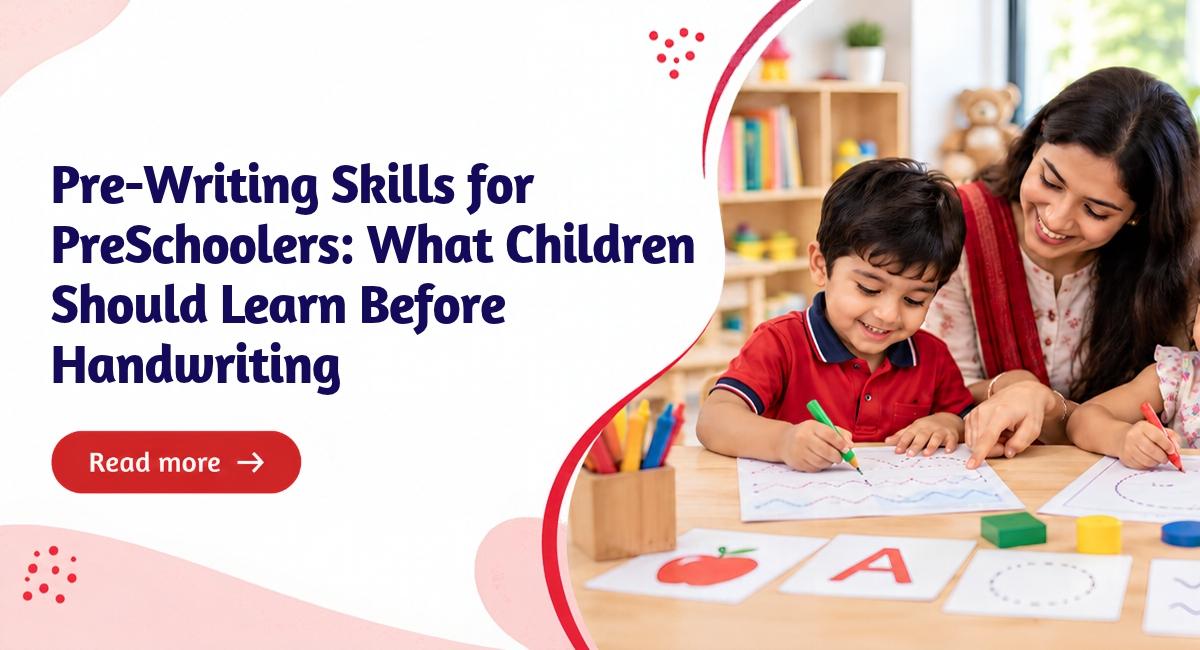
Table of content
1. Introduction
2. What Are Pre-Writing Skills for Preschoolers?
3. Pre-Writing Skills for Preschoolers: What Comes Before Letter Formation?
4. Pre-Writing Activities for Preschoolers: Drawing, Scribbling and Tracing
5. Pre-Writing Activities for Preschoolers: Clay, Threading, Tearing and Pasting
6. Fine Motor Skills for Kids: Why Strong Hands Matter for Writing
7. Fine Motor Skills for Kids Through Play and Everyday Activities
8. Pencil Grip for Preschoolers: When Should Parents Correct It?
9. Handwriting Readiness: How Can Parents Tell When a Child Is Ready?
10.Handwriting Practice for Kids: What Should Parents Do at Home?
11.Conclusion
12.Frequently Asked Questions
Introduction
Before a child can comfortably write A, B, C or their own name, their hands need time to become stronger and more coordinated. Scribbling with crayons, rolling clay, tearing paper, drawing shapes, stacking blocks and even buttoning clothes can slowly prepare the fingers, wrists and eyes for writing. These early experiences are known as Pre-Writing Skills for PreSchoolers, and they are an important part of school readiness. Rather than pushing children into formal handwriting too early, parents and teachers can help them build the physical control, confidence and interest needed for writing through simple everyday play.
What Are Pre-Writing Skills for PreSchoolers?
Pre-Writing skills for PreSchoolers are the abilities children develop before they begin writing letters and words independently. They include hand strength, finger control, hand-eye coordination, visual attention, the ability to make marks and shapes and growing comfort with crayons, pencils and other tools.
India's National Curriculum Framework for the Foundational Stage recognises drawing, scribbling and other early mark-making experiences as part of emergent writing. It explains that young children's early writing develops through their conversations, experiences, drawings, reading and pretend play before gradually moving towards conventional writing. Writing readiness is therefore not about asking a three-year-old to repeatedly copy letters. Children first need opportunities to control their hands and understand that the marks they make can have meaning.
Pre-Writing Skills for PreSchoolers: What Comes Before Letter Formation?
Before children form letters neatly, they usually experiment with simple movements and shapes. Scribbling may look random to Parents, but it gives a child valuable practice in controlling a writing tool and deciding where to move it on the page. Over time, children become more comfortable making straight lines, curved lines, circles and simple shapes. These movements later appear inside letters and numbers, which is why drawing and mark-making are useful foundations for handwriting.
Pre-Writing Activities for PreSchoolers: Drawing, Scribbling and Tracing
Some of the most useful Pre-Writing activities for PreSchoolers are also the simplest. Large crayons and blank sheets allow children to explore movement freely. They can make dots, lines, circles and pictures without worrying about staying inside a pattern. As control improves, children can try simple paths, large shapes and age-appropriate tracing. The activity should remain relaxed. A child who draws a wobbly circle or goes outside a line is still practising valuable hand movements.
Drawing also gives children a reason to communicate. They may explain that a few lines represent their family, house or favourite animal. This connection between speaking, drawing and meaning is part of early literacy development, not just an art activity. The goal at this stage is control and confidence, not perfect handwriting.
Pre-Writing Activities for PreSchoolers: Clay, Threading, Tearing and Pasting
Children do not need to hold a pencil all day to prepare for writing. Many hands-on activities strengthen the same small muscles required later for pencil control. Rolling, squeezing and shaping clay encourage finger strength. Threading large beads requires children to coordinate what their eyes see with what their hands are doing. Tearing paper, folding, pasting and handling safe classroom materials help develop precision.
Fine Motor Skills for Kids: Why Strong Hands Matter for Writing
Fine motor skills for kids involve controlled movements of the smaller muscles in the hands and fingers. Children use these muscles for drawing, turning pages, buttoning clothes, using a spoon, handling blocks and eventually writing. Writing needs several abilities to work together. The child must hold a tool, control pressure, move the fingers and wrist, watch the page and guide the pencil towards the intended position.
These skills develop gradually. NCERT describes a progression from basic activities such as scribbling and clay work towards more precise tasks such as cutting along lines, threading smaller beads, drawing with pencils and producing clearer writing. This is why everyday play matters. Blocks, puzzles, art, sand play and manipulative activities can all contribute to stronger hands and better coordination long before formal handwriting becomes the focus.
Fine Motor Skills for Kids Through Play and Everyday Activities
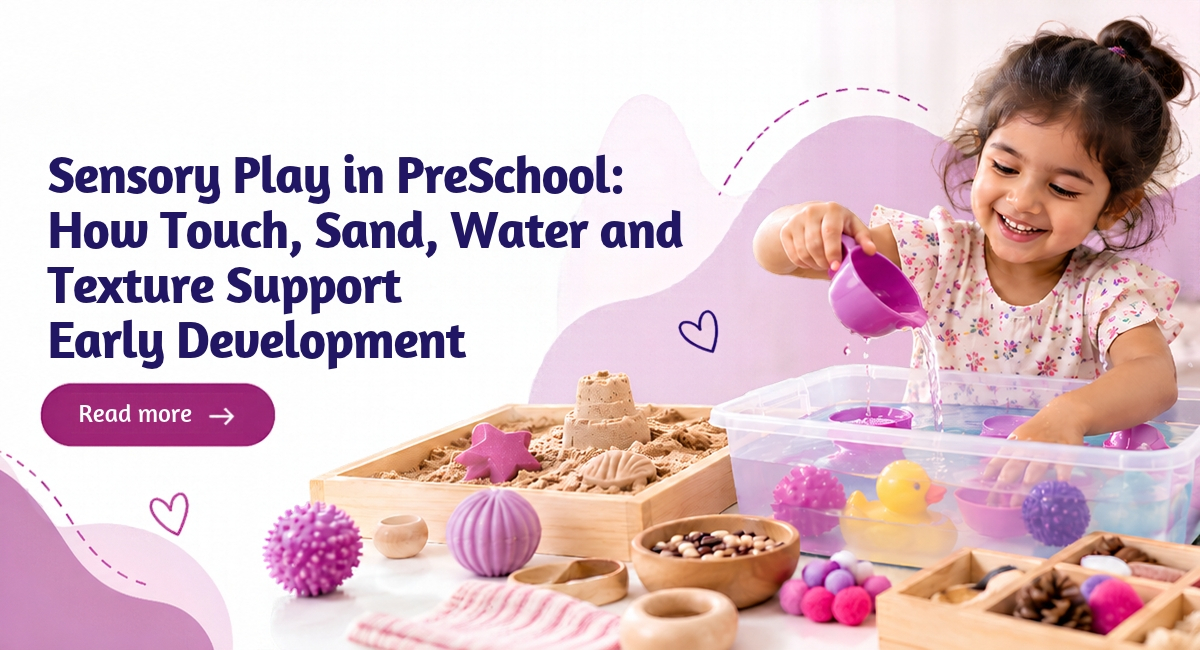
Fine motor development does not have to happen only at a classroom table. Children use their hands throughout the day, and many ordinary experiences can strengthen coordination. Building with small blocks requires careful placement. Scooping and shaping sand strengthens the hands. Pouring during water play develops control. Art activities encourage children to use crayons, brushes and different materials in varied ways. At NewAge PreSchools, free play, sand play, water play and creative activities are part of the learning environment. The school specifically describes these experiences as supporting fine and gross motor skills alongside creativity and exploration.
Pencil Grip for PreSchoolers: When Should Parents Correct It?
Parents often worry about pencil grip for PreSchoolers, especially when a child holds a crayon with the whole hand or uses an unusual position. In the early years, grip develops gradually as hand strength and coordination improve. Young children may move through different ways of holding drawing tools before developing a more efficient grip. Instead of repeatedly correcting every movement, adults can provide suitable crayons, pencils and activities that encourage comfortable control.
Handwriting Readiness: How Can Parents Tell When a Child Is Ready?
A child may be becoming ready when they can comfortably use crayons, copy simple shapes, control basic lines and remain interested in drawing for a short period. Children may also show growing hand-eye coordination during puzzles, construction activities, threading and art. Their drawings may become more intentional and they may start showing interest in letters they see in books, signs or their own name.
These are useful signs because handwriting involves much more than remembering what a letter looks like. Children need physical control, visual awareness, language knowledge and an understanding that written symbols carry meaning. School readiness should be gradual. Children should have enough time to develop these foundations before adults expect neat letter formation.
Handwriting Practice for Kids: What Should Parents Do at Home?
Early handwriting practice for kids does not have to mean completing worksheets every evening. A better starting point is to make drawing and mark-making part of normal home life. Give children paper, crayons and drawing materials and allow them to create freely. Simple activities such as drawing family members, making a pretend shopping list, tracing a path for a toy car or creating a birthday card can give writing movements a meaningful purpose.
Conclusion
Children do not suddenly become ready to write because they reach a particular age. Handwriting grows from many earlier experiences such as scribbling, drawing, building, moulding clay, playing with sand and learning to control small movements with the hands. When Pre-Writing skills for PreSchoolers develop naturally through play and guided activities, children can approach writing with greater confidence rather than pressure.
Admissions Open 2026-27 at NewAge PreSchools: For more helpful parenting tips, early learning insights, and PreSchool guidance, explore the NewAge PreSchools Blog. Discover how we create a nurturing and engaging environment where young children can learn, explore and grow with confidence. If you are looking for PreSchool admission in Yelahanka, visit NewAge PreSchools to learn more about our programs, curriculum and admission process for 2026–27.
Frequently Asked Questions
Should parents correct pencil grip immediately?
Not every early grip needs constant correction. Children naturally explore different ways of holding tools while hand strength develops.
Which fine motor activities for preschoolers are useful?
Clay play, threading, block building, drawing, paper tearing, pasting, folding and supervised cutting are useful examples. Sand and water activities can also strengthen coordination and hand control.
Does colouring help with handwriting readiness?
Yes. Colouring can help children practise holding tools, controlling movement and coordinating their eyes and hands. It should remain an enjoyable activity rather than becoming a test of whether a child can stay perfectly inside the lines.
At what age should children start handwriting?
There is no single age when every child should begin formal handwriting. Development happens at different speeds. During the preschool years, children can gradually move from scribbling and drawing towards shapes, letter-like forms and later clearer letter formation.
What are the most important Pre-Writing skills for Preschoolers?
Important skills include hand and finger strength, hand-eye coordination, controlled mark-making, drawing, awareness of simple lines and shapes and comfortable use of crayons or pencils. Children also need language experiences so they understand that writing can communicate meaning.

Admin
Shivani Sahu is an experienced blogger and dedicated educator with a decade of teaching experience in Pre-primary education. She loves to help and inspire young children to learn more and grow as individuals. Shivani writes articles to share her knowledge and tips, hoping to motivate children to discover new things, learn a lot, and reach their best potential.


Leave a Reply
Your email address will not be published. Required fields are marked *
Comments
No comments available