Why Daily Routines Matter for Preschoolers: Building Confidence, Independence and Security
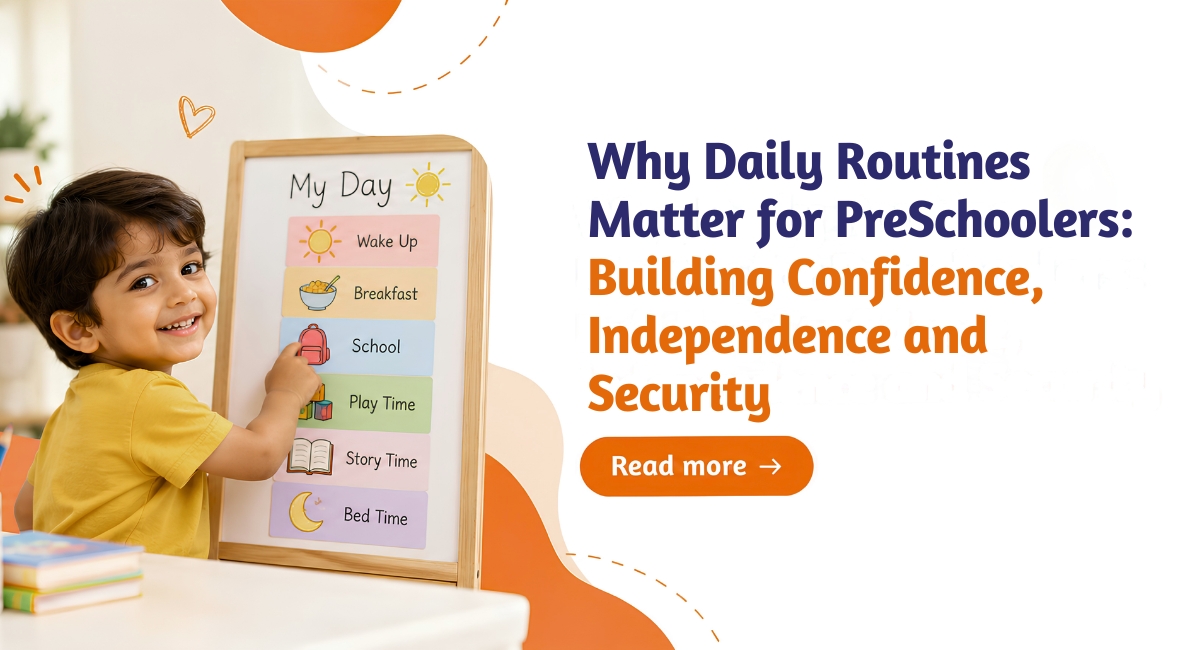
Table of content
1. Introduction
2. Why a Daily Routine for Kids Builds Security and Confidence
3. Morning Routine for Kids: Starting the Day Without a Rush
4. Preschool Routine: Why Predictability Supports Learning
5. What Should a Balanced Preschool Daily Schedule Include?
6. Daily Routine for Kids: How Small Responsibilities Build Independence
7. Preschool Routine and Healthy Habits for Kids
8. Morning Routine for Kids and Smoother Preschool Transitions
9. Creating a Realistic Routine for a 3-Year-Old?
10.What Happens When the Routine Changes?
11.Conclusion
12.Frequently Asked Questions
Introduction
Young children feel more comfortable when they have some idea of what will happen next. Waking up, getting ready, going to school, eating, playing and sleeping at familiar times can make the day feel easier to understand. A simple daily routine for kids is not about controlling every minute. It gives PreSchoolers a sense of security while gradually helping them become more independent, responsible and confident in everyday tasks.
Why a Daily Routine for Kids Builds Security and Confidence
A daily routine helps children understand the order of everyday events. When a child knows that breakfast comes before getting dressed or that story time happens before bed, there is less uncertainty about what happens next. The CDC explains that consistent and predictable routines can help young children feel safe and secure.
This sense of predictability can also build confidence. Instead of depending on an adult for every instruction, children gradually remember familiar steps and begin participating on their own. The routine acts as a gentle guide while still leaving enough space for play, conversation and unexpected moments.
Morning Routine for Kids: Starting the Day Without a Rush
A simple morning routine for kids can make PreSchool mornings calmer for both children and parents. Waking at a reasonably regular time, using the washroom, brushing teeth, getting dressed and having breakfast in a familiar order can help children understand what needs to happen before leaving home.
The routine does not need to be perfect every morning. Young children may move slowly, become distracted or suddenly decide that they do not want to wear the clothes chosen for them. Leaving a little extra time and allowing small choices can reduce unnecessary arguments while helping children practise independence.
PreSchool Routine: Why Predictability Supports Learning
A good PreSchool routine gives children a familiar structure while offering different kinds of experiences throughout the day. Children may gradually recognise that arrival is followed by a welcome activity, play is followed by story time, and snacks or outdoor activities happen at familiar points.
The National Curriculum Framework for the Foundational Stage says that the preSchool day should be organised so children receive a range of experiences. It recommends balancing child-led and teacher-guided activities, quiet and active experiences, individual and group learning, as well as adequate time for art, outdoor play and free play. Predictability can also make transitions easier. A child who understands that toys are packed away before story time may slowly learn to move between activities with less adult prompting.
What Should a Balanced PreSchool Daily Schedule Include?
A PreSchool daily schedule should not mean keeping young children academically busy for every minute. PreSchoolers need a balanced day with conversation, stories, movement, creative activities, early literacy and numeracy, free play, outdoor experiences and appropriate breaks.
NCERT specifically recommends balancing different kinds of activities during the foundational years, including quieter experiences after physical activity and teacher-guided learning alongside independent play. This helps children remain interested without expecting them to concentrate on one type of task for too long. At NewAge PreSchools, the learning programme combines play-based and activity-led learning with structured learning goals. Free play, water play, sand play, creative experiences, phonics and school-readiness activities form part of the wider learning environment.
Daily Routine for Kids: How Small Responsibilities Build Independence
One useful part of a daily routine for kids is allowing children to take responsibility for simple age-appropriate tasks. A PreSchooler may put toys back after playing, carry their own small school bag, place shoes in the correct spot or help prepare materials for an activity.
These tasks may seem small to parents, but doing them regularly helps children understand that they are capable of contributing. UNICEF India encourages parents of young children to involve them in suitable household activities and to give them opportunities to participate in everyday responsibilities. Independence should develop gradually. Parents can first demonstrate a task, help when necessary and slowly reduce support as the child becomes more confident.
PreSchool Routine and Healthy Habits for Kids
Regular routines are a natural way to introduce healthy habits for kids. Washing hands before eating, brushing teeth at familiar times, sitting down for meals and making time for physical play can become part of the child's normal day rather than something they need to be constantly reminded about.
Structuring the day with regular waking times while also encouraging hygiene, play, communication and family participation for young children is recommended. These habits become easier to remember when they happen consistently. Sleep also needs a predictable pattern. A simple bedtime routine for kids might include washing up, brushing teeth, changing into night clothes, reading a book and going to bed at a regular time.
Morning Routine for Kids and Smoother PreSchool Transitions
For some children, leaving home for PreSchool is one of the hardest parts of the morning. A predictable sequence can make this transition feel more familiar. When children know what happens between waking up and reaching school, there are fewer surprises to manage.
Parents can also give simple reminders about what comes next rather than repeating several instructions at once. Saying that breakfast comes first and shoes come afterwards is easier for a young child to understand than giving a long list of tasks. The same idea works at PreSchool. Regular arrival routines, familiar teachers and predictable classroom activities can help children settle more comfortably, especially during the first few weeks of school.
Creating a Realistic Routine for a 3-Year-Old?
A routine for 3-Year-Old children should be simple and flexible. At this age, children are becoming more independent, but they still need help and support from parents and teachers. The aim is not to create a strict timetable, but to keep major parts of the day reasonably predictable. Parents should also watch their child's individual needs. Some children require more rest, while others need more physical activity. A useful routine works with the child's development and family schedule rather than copying another family's timetable exactly.
What Happens When the Routine Changes?
No family can follow the same schedule every day. Festivals, travel, family functions, illness, school holidays and unexpected events can all change normal routines. Children can learn flexibility while still benefiting from everyday predictability.
When possible, tell your child about a change in simple language. The CDC recommends explaining changes calmly while keeping routines simple and predictable. Familiar parts of the day, such as bedtime stories or regular meal habits, can also be maintained even when the rest of the schedule changes. Avoid worrying if a routine is disturbed occasionally. What matters most is having a familiar pattern that the family can return to.
Conclusion
A useful routine does not mean filling every hour with activities. It gives young children familiar points in the day while protecting plenty of time for movement, play, conversation, creativity and rest. A consistent daily routine for kids, a calm morning and a balanced preSchool can gradually support confidence, independence and a stronger sense of security.
Admissions Open 2026-27 at NewAge PreSchools: For more helpful parenting tips, early learning insights, and PreSchool guidance, explore the NewAge PreSchools Blog. Discover how we create a nurturing and engaging environment where young children can learn, explore and grow with confidence. If you are looking for PreSchool admission in Yelahanka, visit NewAge PreSchools to learn more about our programs, curriculum and admission process for 2026–27.
Frequently Asked Questions
What is a suitable bedtime routine for kids?
A calm sequence such as brushing teeth, changing into night clothes, reading together and going to bed at a regular time can work well. The American Academy of Pediatrics recommends predictable bedtime steps and consistent sleep times.
How can I improve my child's morning routine?
Keep the number of steps simple and follow a similar order each day. Allow enough time so the child can complete small tasks without feeling rushed. Giving limited choices can also encourage cooperation.
What should a Preschool daily schedule include?
A balanced schedule can include play, stories, conversation, movement, outdoor activities, art, early literacy, numeracy, meals or snacks and suitable periods of rest. The exact structure varies according to the child's age and programme.
Should a preschool routine be very strict?
No. Young children need structure, but they also need flexibility. A useful routine provides familiar times and sequences while allowing enough room for free play, exploration and changing needs.
Why is a daily routine important for Preschoolers?
A routine helps children know what to expect. This can create a sense of safety while supporting independence, cooperation and healthy everyday habits.

Admin
Shivani Sahu is an experienced blogger and dedicated educator with a decade of teaching experience in Pre-primary education. She loves to help and inspire young children to learn more and grow as individuals. Shivani writes articles to share her knowledge and tips, hoping to motivate children to discover new things, learn a lot, and reach their best potential.




Leave a Reply
Your email address will not be published. Required fields are marked *
Comments
No comments available