Nature-Based Learning for PreSchoolers: Why Outdoor Exploration Builds Curious Minds
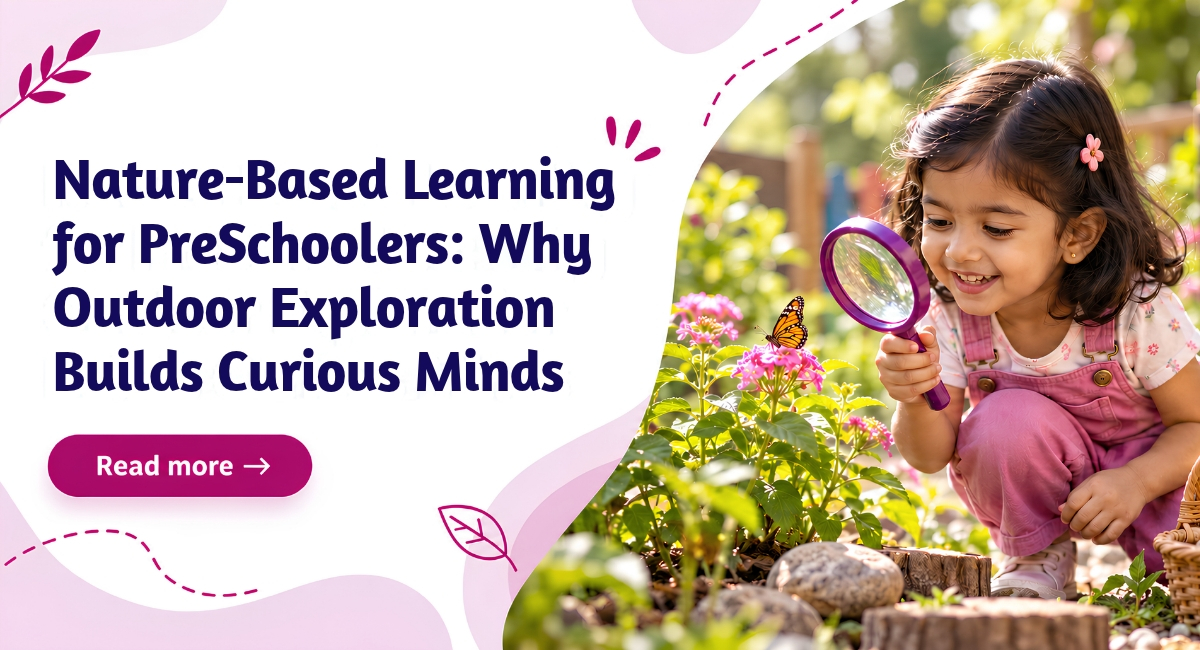
Table of content
1. Introduction
2. What Is Nature-Based Learning for PreSchoolers?
3. Why Nature Is Important in Early Childhood Education
4. How Outdoor Exploration Builds Curiosity
5. Benefits of Outdoor Learning for Young Children
6. Simple Nature-Based PreSchool Activities
7. How Teachers Make Outdoor Learning Meaningful
8. How Parents Can Encourage Nature Learning at Home
9. Conclusion
10.Frequently Asked Questions
Introduction
Have you ever noticed your child stopping to watch an ant, picking up a colourful leaf or asking why birds build nests? These small moments may seem ordinary to parents, but they are exciting discoveries for young children. A garden, a tree or even a puddle can become a place where children learn something new.
Nature-based learning for PreSchoolers encourages children to explore their surroundings through observation, movement and simple activities. Instead of learning only from pictures and books, children get opportunities to see, touch and understand things around them. Outdoor experiences can support curiosity, creativity, confidence and practical learning. With guidance from parents and teachers, even a short walk outside can become a meaningful learning experience that children enjoy and remember.
1. What Is Nature-Based Learning for PreSchoolers?
Nature-based learning means helping children understand the world through experiences with plants, trees, insects, soil, water and other natural surroundings. It does not always require a large garden or forest. A small outdoor space with a few plants can also offer useful learning opportunities. For example, children can observe a seed growing into a plant, compare different leaves or notice how shadows change during the day. These experiences help children connect what they see with what they learn.
Outdoor learning for PreSchoolers combines movement, observation, conversation and play. Teachers can guide children by asking simple questions and encouraging them to share their ideas. The aim is not to make children memorise facts about nature. It is to help them notice, explore and understand their surroundings through real experiences.
2. Why Nature Is Important in Early Childhood Education
The importance of nature in early childhood education comes from the opportunities it gives children to learn through their senses. Young children often understand ideas better when they can see and experience them. A picture of a butterfly may introduce its colours, but watching one move between flowers can create greater interest. Similarly, touching dry and wet soil can help children understand differences in texture.
Nature also provides opportunities for movement, conversation and imaginative play. According to UNICEF, playful learning supports children's development through enjoyable and meaningful experiences. Outdoor experiences can become part of this learning approach. When children spend time observing natural surroundings, they begin connecting classroom lessons with the world they see every day.
3. How Outdoor Exploration Builds Curiosity
Children are naturally curious. They want to know why things happen and how the world works. A child watching a caterpillar may ask where it is going. Another may wonder why some leaves are green while others are brown. These questions create learning opportunities. Teachers and parents do not need to provide every answer immediately. They can encourage children to observe and think. For example, instead of directly explaining why a plant needs water, as a parent / teacher can help the child notice what happens when a plant is watered regularly. Nature exploration activities for PreSchoolers help children practise observing, comparing and asking questions.
4. Benefits of Outdoor Learning for Young Children
The benefits of outdoor learning for kids go beyond enjoying fresh air. Outdoor activities can support different areas of a child's development.
Physical Development: Walking, running, balancing and playing outdoors help children practise body movement and coordination. Picking up leaves or watering plants can also support hand movements and control.
Thinking and Problem-Solving: Children may compare stones, sort leaves or work out how to build a small structure using natural materials. Such activities encourage observation and simple problem-solving.
Social and Emotional Development: Group activities give children opportunities to share materials, wait for turns and cooperate. Outdoor exploration can also provide a pleasant change from indoor routines. The World Health Organisation recommends regular physical activity and less sedentary time for young children. Outdoor play can be one enjoyable way to support healthy movement.
5. Simple Nature-Based PreSchool Activities
Nature-based PreSchool activities do not need expensive materials or complicated planning. Simple activities using everyday natural objects can encourage children to explore.
Leaf Colour and Shape Hunt: Ask children to find fallen leaves with different shapes, sizes and colours. They can compare the leaves and talk about what makes each one different. This introduces observation, sorting and descriptive language.
Plant a Seed and Watch It Grow: Help children plant a seed in a small pot. Let them water it and observe changes over several days. They can draw pictures of the plant as it grows. This activity introduces responsibility and patience.
Listen to Nature Sounds: Take children to a safe outdoor area and ask them to listen quietly. They may notice birds, rustling leaves or insects. Encourage them to describe the sounds they hear.
Explore Shadows: On a sunny day, children can observe shadows made by trees, toys and their own bodies. They can compare how shadows change when objects move. These outdoor activities for PreSchool children make everyday surroundings interesting without requiring formal lessons.
6. How Teachers Make Outdoor Learning Meaningful
Outdoor learning becomes more useful when teachers connect exploration with age-appropriate learning goals. For example, collecting fallen leaves can introduce counting, colours and shapes. Observing birds can encourage storytelling and new vocabulary.
Watering plants can help children understand simple responsibilities. Teachers can ask questions such as, "What do you notice?" or "Why do you think this happened?" These questions encourage children to explain their thoughts. At NewAge PreSchools, the learning approach includes experiential and activity-based learning that helps children connect ideas with practical experiences.
7. How Parents Can Encourage Nature Learning at Home
Parents do not need to plan special trips every weekend to introduce nature. Small everyday experiences can be equally meaningful. During an evening walk, ask your child to notice flowers, birds or different types of trees. If you have a balcony, let your child help water a plant. You can also encourage children to collect fallen leaves and use them for simple art activities. Avoid picking unknown plants or touching unfamiliar insects. Parents can make outdoor experiences more interesting by listening to children's questions.
Conclusion
Children are naturally curious about the world around them. Watching a tiny ant, noticing a colourful flower or listening to birds can become a lovely learning experience. These simple moments help children ask questions, explore and understand nature. With a little time and encouragement, everyday outdoor activities can build curiosity and a love for learning.
Admissions Open 2026-27 at NewAge PreSchools.
For more helpful parenting tips, early learning insights, and PreSchool guidance, explore the NewAge PreSchools Blog. Discover how we create a nurturing and engaging environment where young children can learn, explore and grow with confidence. If you are looking for PreSchool admission in Yelahanka, visit NewAge PreSchools to learn more about our programs, curriculum and admission process for 2026–27.
Frequently Asked Questions
How can parents keep outdoor learning safe?
Choose suitable locations, supervise children, check weather conditions and avoid unknown plants, insects or unsafe objects.
What are some easy nature activities for PreSchoolers?
Planting seeds, observing birds, comparing leaves, listening to outdoor sounds and exploring shadows are simple activities.
Can nature-based learning happen without a large playground?
Yes. A balcony garden, small outdoor area or nearby park can provide useful opportunities for supervised nature exploration.
Why is outdoor learning important for PreSchool children?
Outdoor experiences provide opportunities for movement, observation, curiosity, communication and practical learning.
What is nature-based learning for PreSchoolers?
It is a learning approach where children explore plants, water, soil, weather and other natural surroundings through observation, play and simple activities.

Admin
Shivani Sahu is an experienced blogger and dedicated educator with a decade of teaching experience in Pre-primary education. She loves to help and inspire young children to learn more and grow as individuals. Shivani writes articles to share her knowledge and tips, hoping to motivate children to discover new things, learn a lot, and reach their best potential.







Leave a Reply
Your email address will not be published. Required fields are marked *
Comments
No comments available